
Last updated November 22, 2026
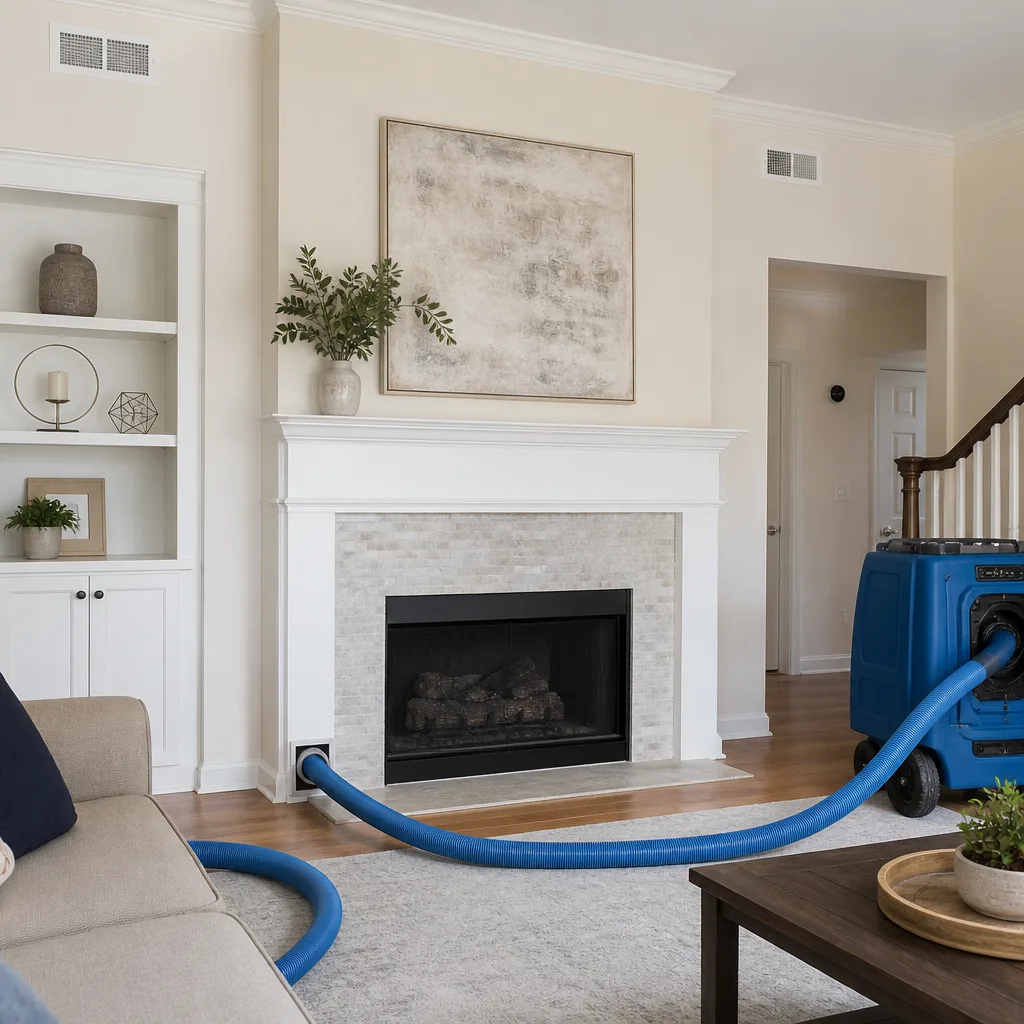 Whole-home duct cleaning
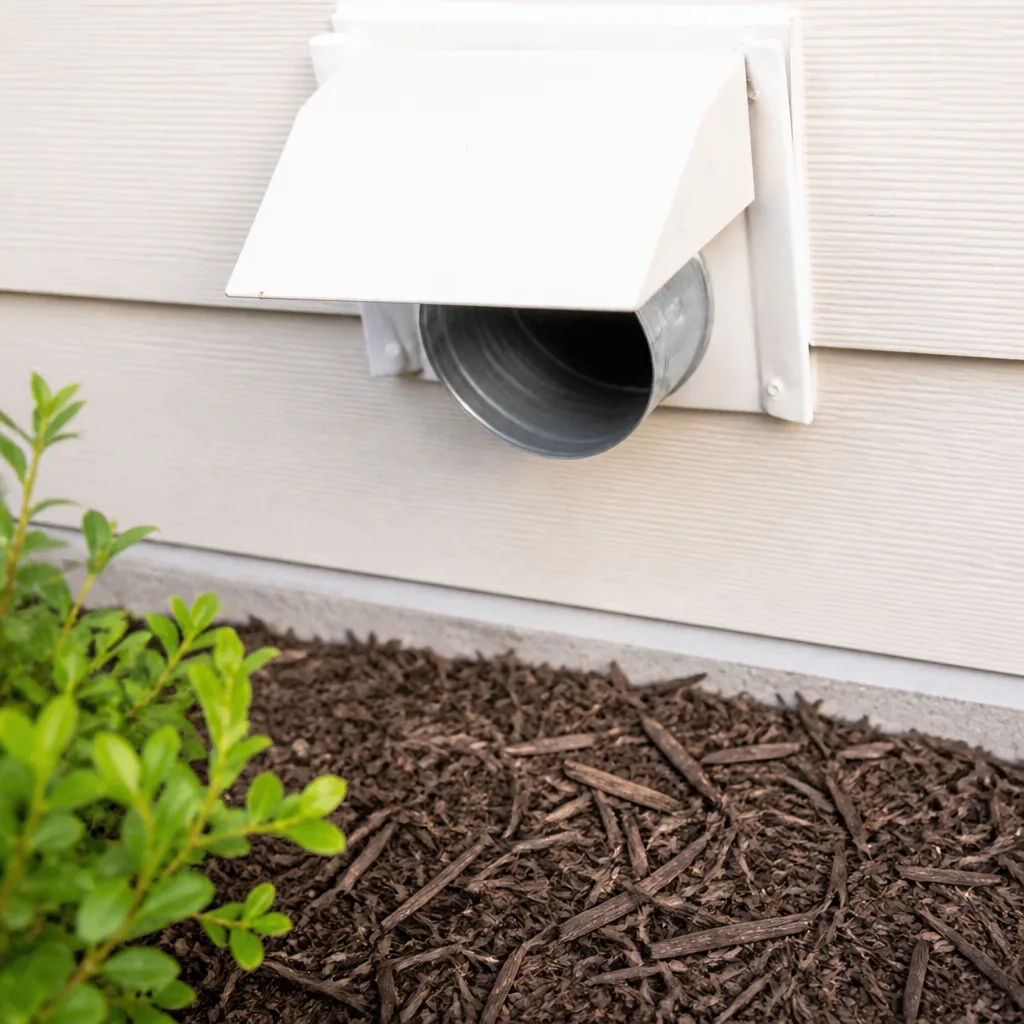 Dryer vent cleaning
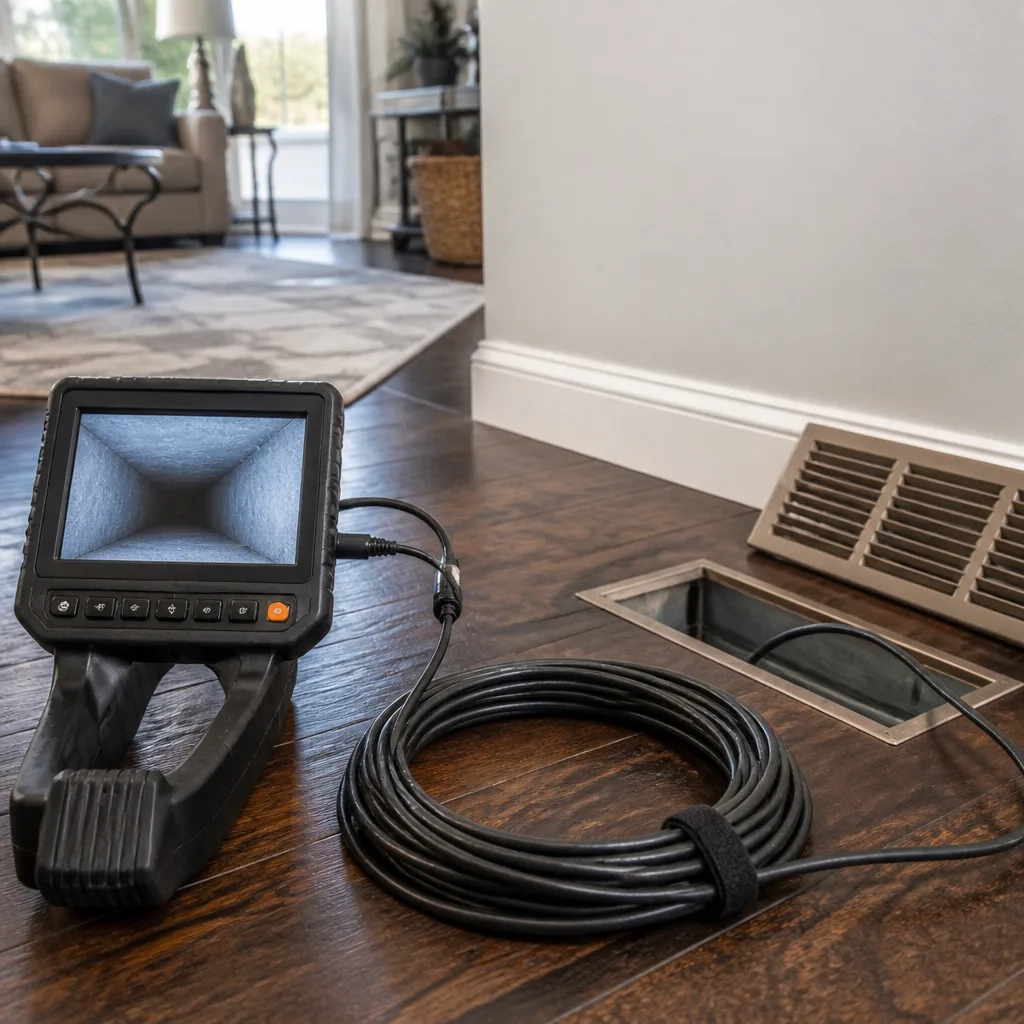 Camera inspection
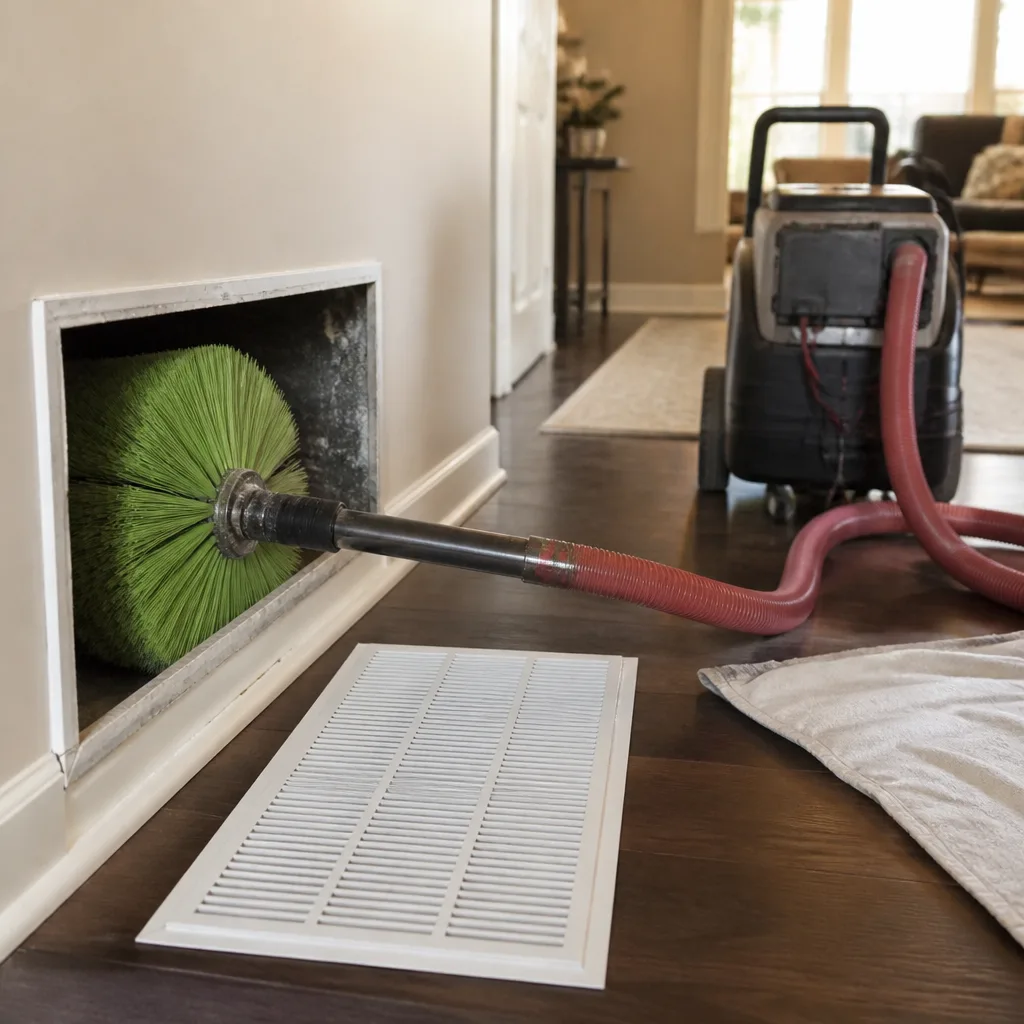 Sanitizing & deodorizing
Whole-system duct and dryer vent check with before-and-after photos - you see exactly what came out of your vents
That "$99 whole-house special" is a bait ad - the real number appears once they are in your hallway, or the "clean" is a shop-vac at the register. We photograph the inside of your ducts before and after instead.
Air Duct Cleaning Emergency Preparedness Guide for Chelsea Homes
Most people picture duct trouble as a slow problem – dusty registers, a faint musty smell, a system that works harder than it should. The reality is that ducts become urgent in a hurry. When water gets into a Chelsea building, when smoke moves through an apartment, when rodents find their way into a return chase, the duct network turns into the building’s circulatory system for whatever is now in the air. The window to act is short, and most of it gets spent on what you can see. This guide walks through exactly what to do in those first hours, what to document, who to call, and how to prepare before anything happens. Chelsea Air Duct Cleaning put it together because we’ve watched preventable contamination spread through systems that could have been shut down in minutes.
Quick Answer
The most important first step in any water, fire, or pest emergency is to shut the HVAC system off completely so it can’t pull contaminants into the duct network and redistribute them through every room. Call your utility or a professional to confirm the system is safe, document everything with photos before anyone touches it, and get a qualified duct contractor on-site to inspect the system before you turn the air back on. In Chelsea, that first 24 to 48 hours matters most – mold can begin colonizing damp duct interiors in that window, and running the system during it is how a contained problem becomes a whole-unit air quality issue.
Styles & brands we work with
- Whole-home duct cleaning
- Dryer vent cleaning
- Camera inspection
- Sanitizing & deodorizing
Table of Contents
- Why Ducts Are the First System That Spreads Contamination
- The First Action in Any Emergency: Shut the System Down
- After Water Intrusion: The Post-Flood Duct Protocol
- After Fire and Smoke: Why Odor-Masking Fails
- After Rodent Intrusion: Containment, Removal, Sanitation, Sealing
- How to Pre-Select a Duct Contractor Before You Need One
- What Makes Chelsea Buildings Different
- What to Document and What to Tell Your Contractor
Why Ducts Are the First System That Spreads Contamination
Think about what a duct system actually does. It moves air, continuously, from a central unit through a network of trunks, branches, and registers into every conditioned room in a building. That’s the point. But it’s also the reason a single contamination source in one part of the building can reach every other part within a heating or cooling cycle. A wet patch of insulation in a mechanical closet, a smoke residue on a coil, rodent droppings in a return plenum – all of these sit inside the same air path the system uses to circulate the air you breathe.
The problem compounds in Chelsea because so many buildings here have long, shared, or reconfigured duct runs. Older row buildings and prewar apartments often have systems that have been modified over decades, with chases and returns that don’t follow a simple diagram. When something gets into that network, it doesn’t stay where it started. It settles. It re-entrains. It finds every gap in the duct seams along the way.
Here’s the part most homeowners miss: the HVAC system will keep running through all of it unless someone physically shuts it off. A system that’s still on during a water event is actively pulling moist air into duct interiors and pushing it back out into rooms. A system that’s still on during a rodent event is circulating fine debris and dander through the same registers you sit next to on the couch. Shutting it down is not a precaution. It’s the intervention.
Professional-grade cleaning equipment exists precisely because the contamination in a duct system is not the same as surface dust. The fine particulate that settles into duct seams, coils, and plenum liners needs real extraction machinery, not a shop vac. That’s the difference between a system that looks clean and one that actually is.
The First Action in Any Emergency: Shut the System Down
Before you call anyone, before you start cleaning up water, before you do anything else – turn the HVAC system off. That means the thermostat goes to OFF, not just to a lower setting, and if you have a dedicated air handler or furnace switch, that gets flipped too. The goal is to stop the fan. A running fan is the delivery mechanism for whatever is now in the system.
Here is the sequence we recommend for any Chelsea homeowner or property manager facing an active emergency:
- Turn the thermostat to OFF. Not to heat, not to cool, not to “fan only”. Off. If there’s a breaker panel serving the HVAC equipment, switch the air handler and condenser circuits off.
- Shut off water at the source if it’s a water event. Call your building’s super or the water utility if you can’t locate the shutoff. Water that keeps running through the affected zone will keep finding its way into ductwork through gaps and plenum connections.
- Ventilate the affected area with outside air if it’s safe to do so. Open windows only if the outside air is clean and the weather allows. Don’t run exhaust fans that could pull contamination deeper into the building.
- Photograph everything before cleanup. Registers, duct openings, the HVAC unit, water lines, any visible smoke residue or pest evidence. Timestamped photos are what your contractor and your insurer will need.
- Do not turn the system back on to “test” it. This is the single most common mistake we see. A system that gets run to see if it still works will pull whatever is in the duct network into every room before anyone has looked inside.
- Call a qualified duct contractor to inspect before air is restored. Inspection comes before operation. Always.
We answer 24/7 at (866) 979-5520. Fast dispatch from 7am to 7pm, Sunday through Friday. If the call comes in later than that window, we book it into the next opening.
One word on safety. The HVAC disconnect and any electrical panel work should be handled by someone qualified to do it. Do not open electrical panels or pull breakers in a wet environment. If water has reached the panel or any electrical equipment, call your utility or a licensed electrician before you touch anything. We’ll say this again later because it matters: high-voltage components and wet mechanical rooms are not a DIY situation, ever.
After Water Intrusion: The Post-Flood Duct Protocol
Mold colonization inside duct interiors can begin within 24 to 48 hours of water exposure – and that’s the window most people spend focused entirely on the visible damage. The floor dries. Drywall gets cut out. Baseboards get pulled. The duct system, meanwhile, sits wet and sealed, and the fan stays on because nobody thought to turn it off. This is the scenario that turns a manageable water event into a whole-unit air quality problem.
Standard cleaning is not sufficient after saturation. A saturated duct interior is a different problem than a dusty one. It requires:
- Moisture assessment of duct interiors, plenum liners, and the HVAC unit itself, not just the visible duct openings
- Containment during the work so airborne particulate doesn’t settle into the rest of the home
- Mechanical cleaning of the full duct run, including the trunk lines and all branch connections
- Sanitizing treatment targeted at microbial growth, applied after the surfaces are dry
- Sealing any compromised seams, boots, or connections that allowed moisture in
That last point is the one that separates a proper response from a temporary one. If the duct system has gaps that let water in, it has gaps that let moisture, dust, and pests in going forward. Repair and sealing aren’t a bonus service on top of cleaning – they’re the step that closes the door on recontamination. Chelsea Air Duct Cleaning handles duct repair and sealing as part of the same job, using professional-grade equipment including air duct cleaning machinery from Rotobrush and Nikro, and Abatement Technologies filtration units to control airborne debris while the work is in progress.
Insulation matters here too. Damp duct insulation becomes a reservoir. If the exterior of the duct run is saturated, that insulation usually has to come off and be replaced, not dried in place.
What to Document for Water Events
- Photos of the water line at its highest point, taken before any extraction
- Photos of every duct register and grille in the affected zone
- The HVAC unit and air handler with any visible moisture or standing water
- Notes on how long the water was present and how long the system ran after
- Any moisture readings taken by whoever handled the water damage
After Fire and Smoke: Why Odor-Masking Fails
Smoke doesn’t just pass through a duct system. It deposits. The residue left behind – soot particles, combustion byproducts, the sticky film that forms when smoke meets a cool surface – settles into duct interiors, coils, plenum walls, and the blower assembly. That residue keeps releasing odor for as long as it’s there. Spray-on deodorizers and ozone treatments mask the smell temporarily and then it comes back, because the source is a physical coating inside the system.
Full remediation after fire or smoke damage in a Chelsea building involves a defined sequence:
- Keep the HVAC off until the system has been inspected. Smoke residue will redistribute through every register if the fan runs before cleaning.
- Clean the full duct network mechanically. Trunk lines, branches, boots, and all connected components, with HEPA-grade extraction so loosened soot doesn’t escape into the home.
- Clean the HVAC unit itself. Coils, blower, and cabinet interior are part of the air path and hold smoke residue as firmly as the ducts do. See HVAC cleaning for why this step can’t be skipped.
- Sanitize surfaces with EPA-registered products formulated for HVAC systems. Sanitizing after cleaning is different from sanitizing instead of cleaning.
- Seal compromised seams and gaps. Smoke finds gaps because air finds gaps. Sealing closes the leak path and helps prevent future infiltration.
- Verify with a walkthrough before restoring air. The system gets tested for odor and airflow before it goes back into service.
Odor-masking fails because it treats the symptom. A technician-led approach treats the surfaces. Chelsea Air Duct Cleaning uses air quality and sanitizing treatments built around products from Honeywell and Aprilaire to handle the microbial and odor side of a fire response once the mechanical cleaning is done. It’s the combination that holds.
After Rodent Intrusion: Containment, Removal, Sanitation, Sealing
Rodent intrusion in a duct system isn’t a cleaning problem first. It’s a containment and order-of-operations problem. If you seal before you clean, you seal contaminated material into the system. If you sanitize before you remove the debris, you sanitize a surface that’s still biologically active. The sequence is the whole discipline here, and getting it wrong is how a pest problem becomes a lingering air quality problem.
Here’s the sequence we use, and the logic behind each step:
- Contain. Shut the HVAC off. Close registers in unaffected rooms. Seal off any openings where debris could escape during the work. Containment protects the rest of the home before anything is disturbed.
- Remove the source. Pest control comes first. Rodent entry points on the building exterior, crawlspaces, mechanical chases, and any wall penetrations get identified and closed by a licensed pest professional. Cleaning a duct system while rodents still have access is a temporary fix.
- Remove the debris mechanically. Droppings, nesting material, and contaminated insulation inside the duct network get extracted under negative pressure with professional equipment, using Abatement Technologies filtration so nothing re-enters the home.
- Sanitize. Once surfaces are clean and dry, they get treated with sanitizing products that address the pathogens and allergens associated with rodent contamination.
- Seal. Duct seams, boots, and entry points get sealed to close the pathways that allowed access in the first place.
- Verify air quality before resuming use. The system is inspected and tested before the fan goes back on.
In Chelsea’s older buildings, the entry points are often not obvious. Rodents move through shared wall chases, mechanical shafts, and gaps around service penetrations that are common in prewar construction and in row buildings that have been modified over the years. Duct repair and sealing closes off the duct system itself; pest professionals close the exterior. Both are needed.
How to Pre-Select a Duct Contractor Before You Need One
Emergencies are the worst time to choose a contractor. Decisions get made on the phone, under pressure, with water on the floor and the fan still running. The Chelsea homeowners who handle an emergency well are almost always the ones who already had a relationship with a duct contractor before anything went wrong, and already knew what to ask, what to have ready, and what a real scope of work looks like.
Here’s how to pre-select a duct contractor in Chelsea:
- Confirm the equipment. Ask what machinery they use. A contractor working with professional-grade systems like Rotobrush or Nikro is set up for full network cleaning, not a superficial pass. Ask about filtration equipment for the work itself – Abatement Technologies units are a real indicator of a remediation-level standard.
- Ask about scope. A duct contractor who only cleans ducts isn’t set up for emergencies. You want one who also handles HVAC cleaning, duct repair and sealing, and sanitizing, because a real emergency response touches all four.
- Confirm licensing and insurance. The local professional should be licensed and insured as their state requires. Ask for it before the emergency. You will not want to ask later.
- Get the scope in writing. A written estimate sets the price. That’s the number you want in an emergency, not a phone quote that gets renegotiated once the technician is on site.
- Ask about before-and-after photos. A contractor who documents their work with photos of your own ducts is one you can trust to do the work. It’s also what you’ll need for an insurance claim.
- Save the number. Program it into your phone and write it on the panel of your HVAC unit. In a flood at 6am, you will not want to be searching.
Chelsea Air Duct Cleaning provides a free estimate so you know the scope and the price before any work starts. Call (866) 979-5520. We answer 24/7. Fast dispatch from 7am to 7pm, Sunday through Friday.
If it’s a different kind of emergency – a dryer vent clog that’s overheating a machine, a lint fire risk, or a vent that’s stopped functioning – see dryer vent cleaning for the specific response. Dryer vents are a leading cause of residential fires, and in Chelsea’s tighter building layouts the run lengths can be shorter than people expect, which means the lint load builds faster than it might in a larger home.
What Makes Chelsea Buildings Different
Chelsea is dense. Row buildings, prewar apartments, mixed residential and commercial blocks, mechanical systems that have been reconfigured across decades of renovations. That density shapes how duct emergencies play out here, and generic advice written for a suburban single-family home won’t always apply.
In Chelsea’s row buildings and prewar apartments, shared wall chases and mechanical shafts mean that water or smoke on one floor can find its way into duct systems serving adjacent units through gaps and penetrations that are not visible from any single apartment. A leak in one unit’s ceiling can saturate duct insulation on a run that serves three more. A cooking fire in one kitchen can deposit smoke residue on shared returns that serve the whole line.
Seasonal shifts matter too. New York’s cold winters and humid summers put more stress on duct insulation than people realize. Cold snaps can cause condensation on poorly insulated duct runs, and humid summer air moving through cool duct interiors can lead to moisture problems that go unnoticed until they’ve already become mold. There’s no salt air in Chelsea – it’s not a coastal building concern – but the seasonal temperature swing is real, and it does show up in duct systems. Insulation that’s compromised by a leak or a rodent problem becomes a much bigger problem in winter and summer than in a mild stretch.
We’ve also seen, across many Chelsea buildings, how frequently reconfiguration is the underlying issue in an emergency. When a duct run was rerouted or extended during a renovation, the new connections are often the weak points during a water or pest event. This is where a full-system approach – Chelsea Air Duct Cleaning handles ducts, HVAC, dryer vents, and air treatment together rather than piecemeal – matters most.
What to Document and What to Tell Your Contractor
When you call a duct contractor during an emergency, the information you have ready determines how well the response goes. The contractor is trying to understand what happened, what the system is, how much of it is affected, and what safety issues exist before they get on site. The more you can provide, the better the plan.
Here’s what to have ready:
- The system type. Furnace type, whether it’s forced-air, what kind of filter setup it has, and where the air handler is located.
- What happened and when. Water, fire, smoke, pests, or a combination. The approximate time of the event and how long the HVAC ran after it.
- Where the affected areas are. Which rooms, which registers, which floors. For apartment buildings, how many units are affected and whether the system is shared.
- Photos. Any visible water lines, smoke damage, duct openings, pest evidence, or HVAC unit conditions.
- Whether the power is safe. Whether water reached any electrical equipment, and whether the panel is affected. If you don’t know, say so – that’s information.
- Insurance status. Whether a claim has been opened and whether the adjuster has been on site.
- Building constraints. Access, elevator or stair restrictions, building management contacts, water shutoff location.
If you have a mortgage or a homeowner’s policy, the insurer will likely need documentation of the damage and the remediation scope. We can work with your insurer on the documentation side. The photos you take at the outset are often more valuable to that process than anything taken afterward.
Common Mistakes to Avoid
- Running the HVAC to see if it still works. This is the fastest way to distribute contamination through the whole system. If there’s been water, fire, or pest damage, don’t run the system to test it. Shut it off and have it inspected first.
- Calling a water damage crew only. Water damage specialists handle the building fabric, not the duct interiors. In Chelsea, both need to be addressed on the same schedule, or the dry building ends up with a wet, contaminated air system.
- Treating an odor problem with ozone or spray deodorizer. Odor masking after fire or smoke treatment hides the smell for a few days and then it returns. The source is residue inside the system, not air in the room.
- Sealing duct gaps before cleaning. Sealing a contaminated duct system just traps the contamination and prevents it from being removed. The sequence is clean, sanitize, then repair and seal.
- Assuming a shared building means the contractor only needs to see one unit. In Chelsea’s row buildings and prewar apartments, duct systems often span units. The scope needs to reflect the full affected network, not one apartment.
- Skipping insurance documentation in the rush. Timestamped photos, moisture readings, and the written scope of work are what your insurer needs. Without them, a covered loss can become a contested one.
- Letting pest control and duct cleaning happen in the wrong order. Cleaning a duct system before entry points are closed is a temporary fix. Both need to be done, in the right sequence.
- Not knowing the shutoff and the HVAC disconnect location. In an emergency, the first five minutes matter most. Knowing where the water shutoff and the air handler switch are is not optional in a dense Chelsea building.
See the difference
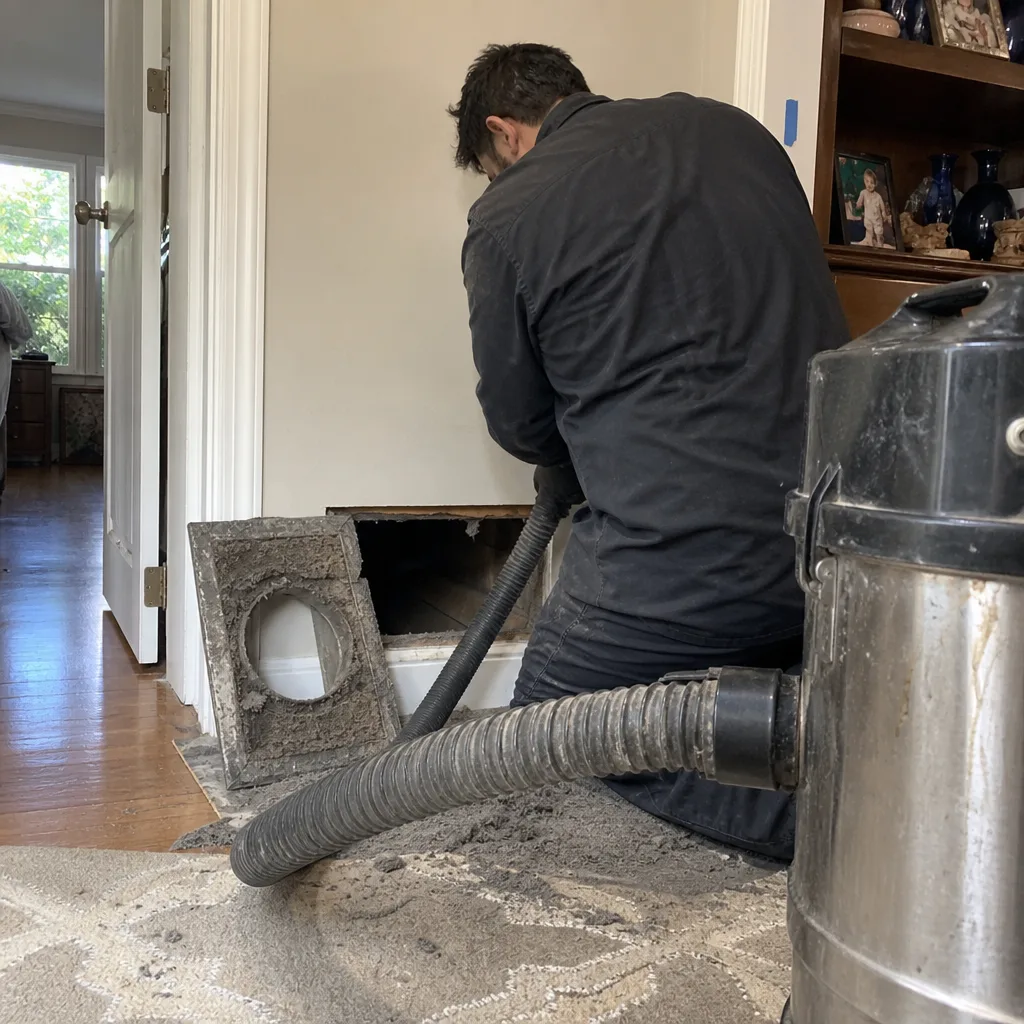 Before
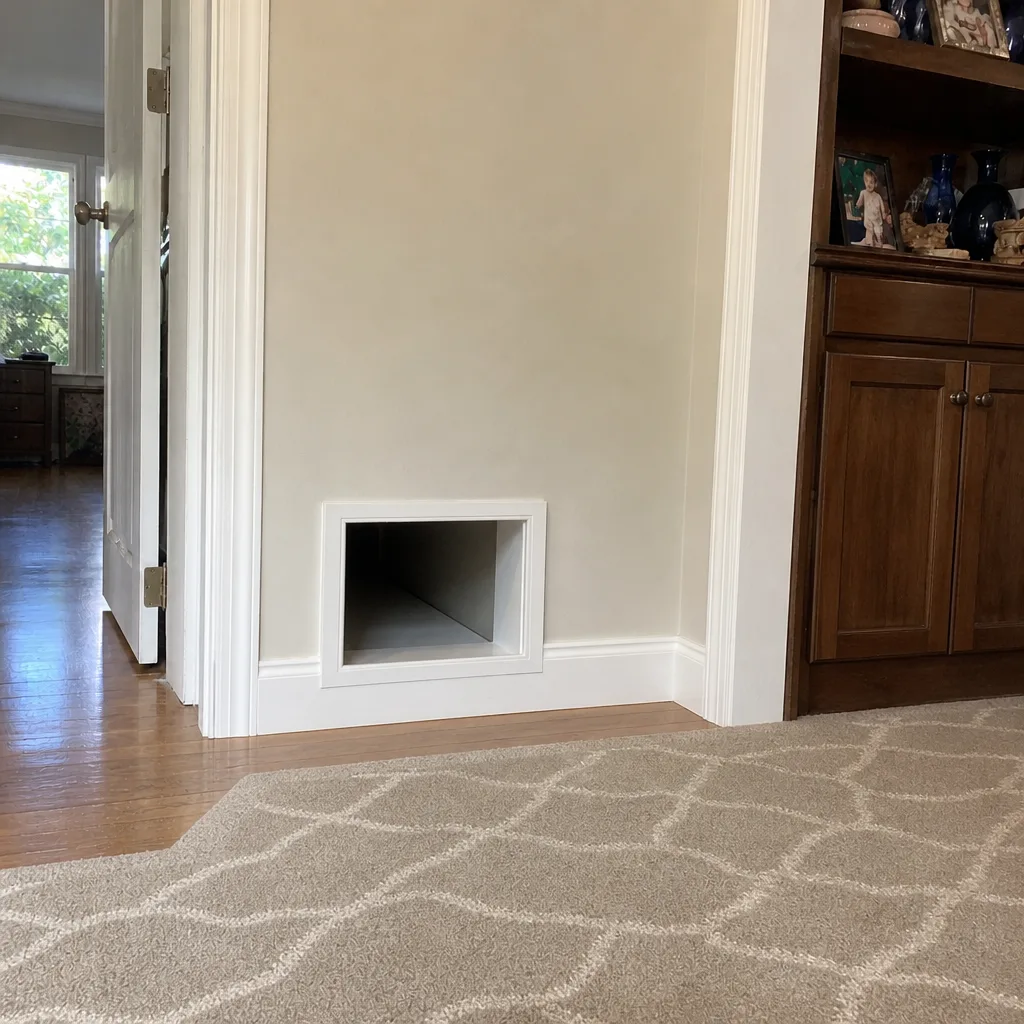 After
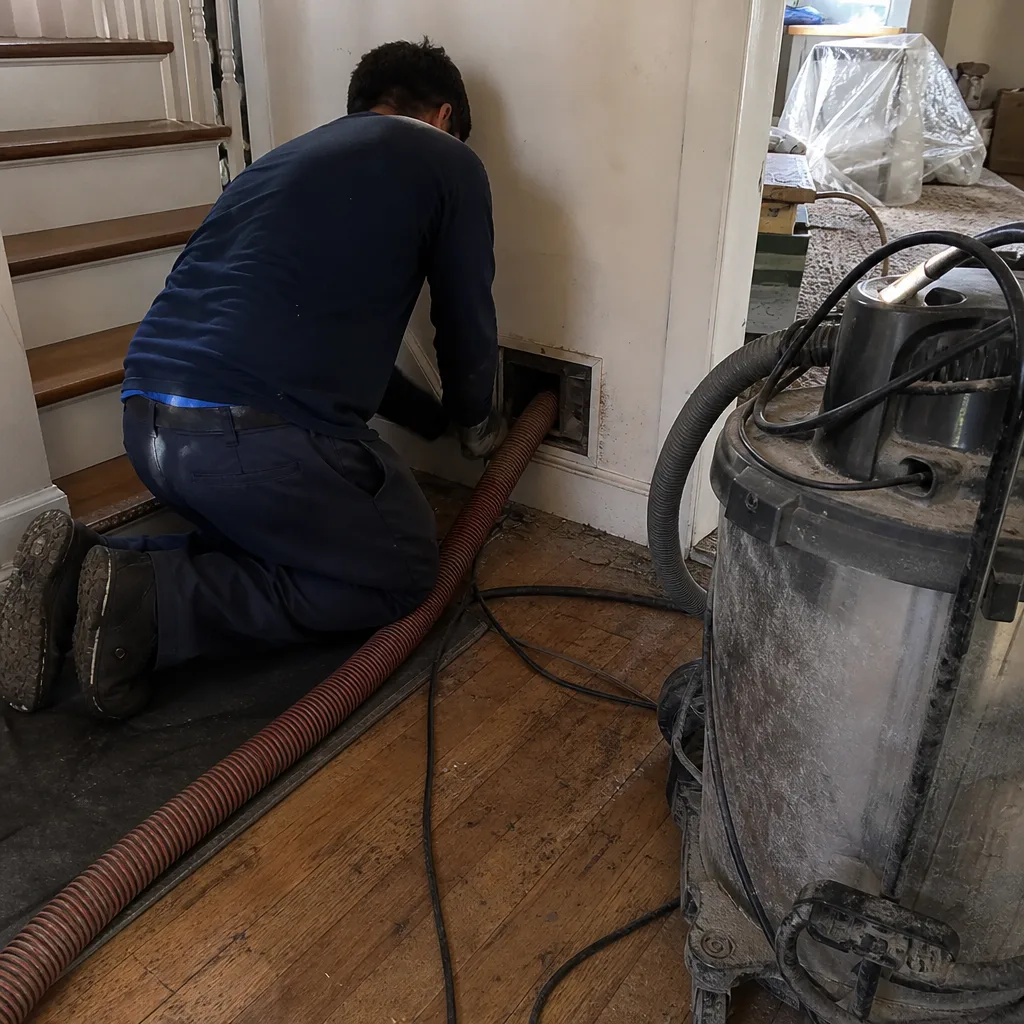 Before
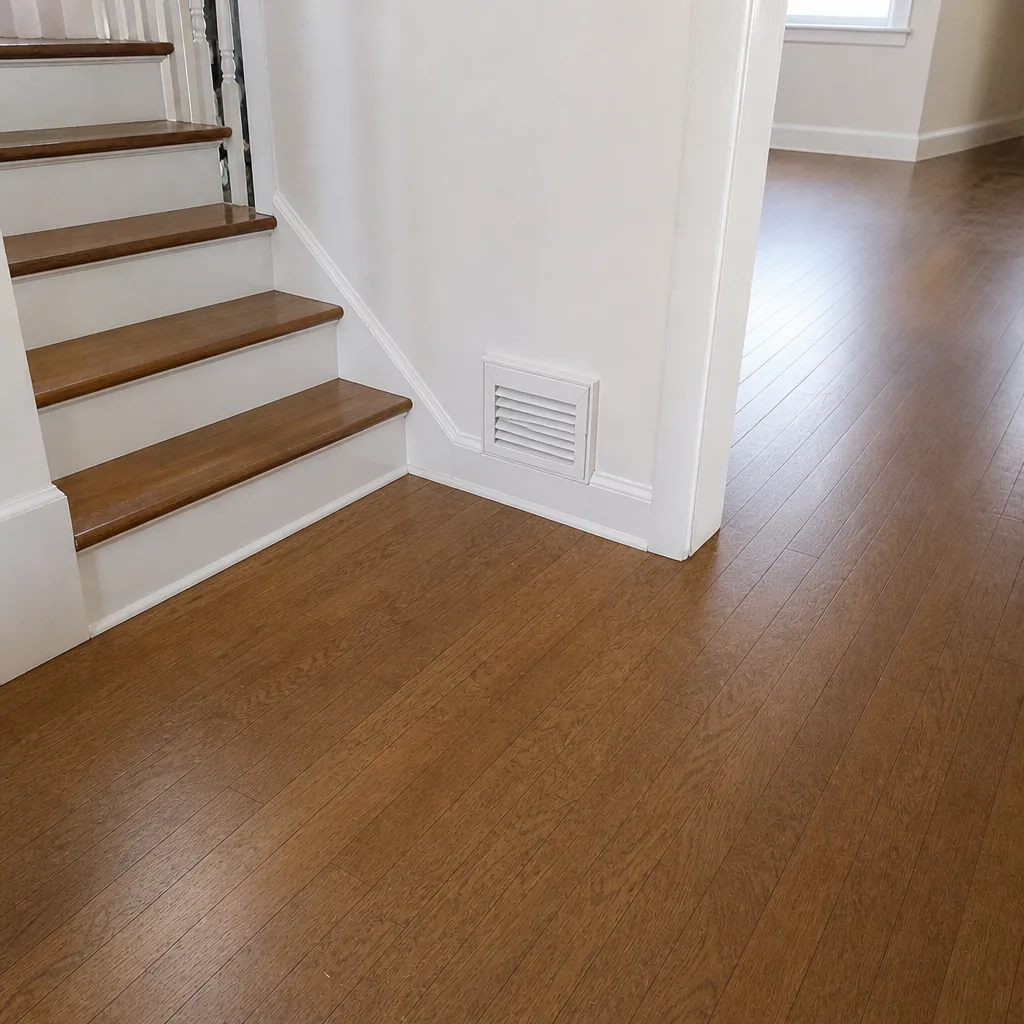 After
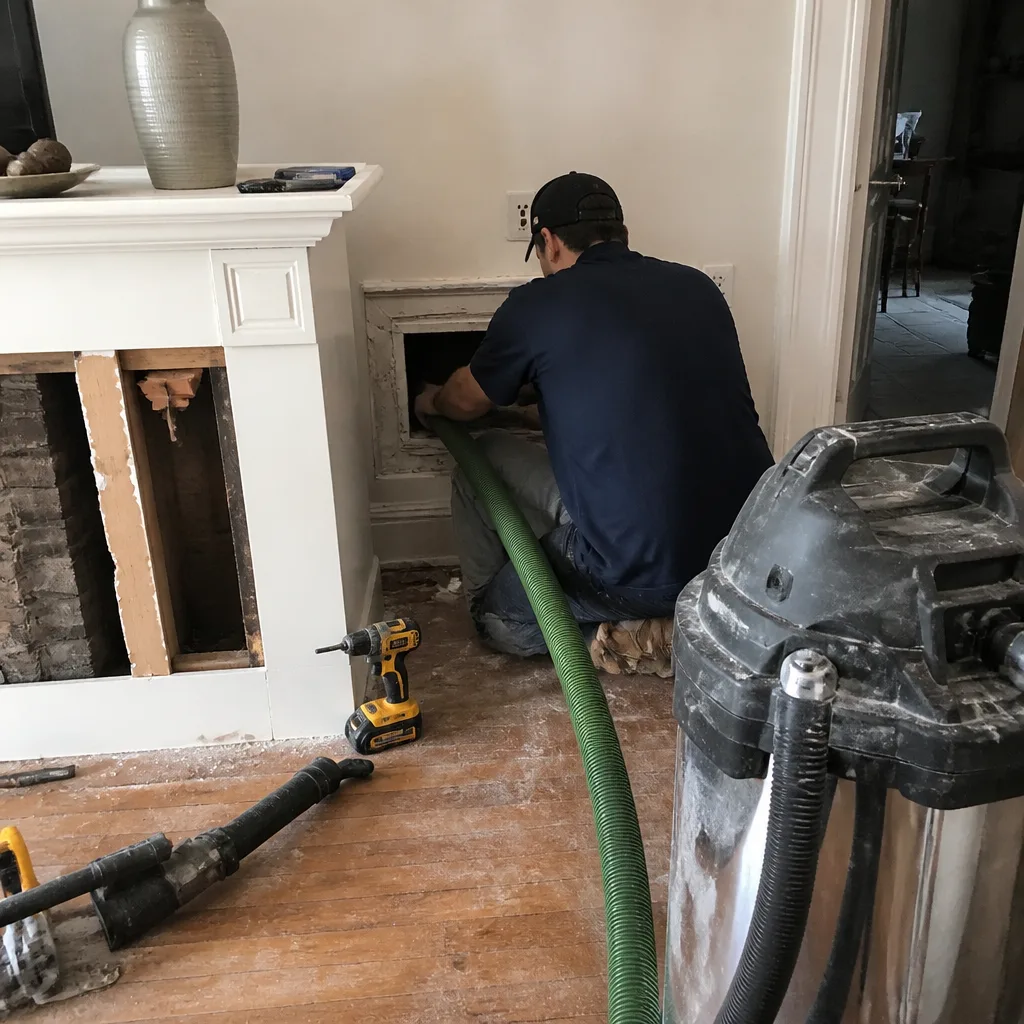 Before
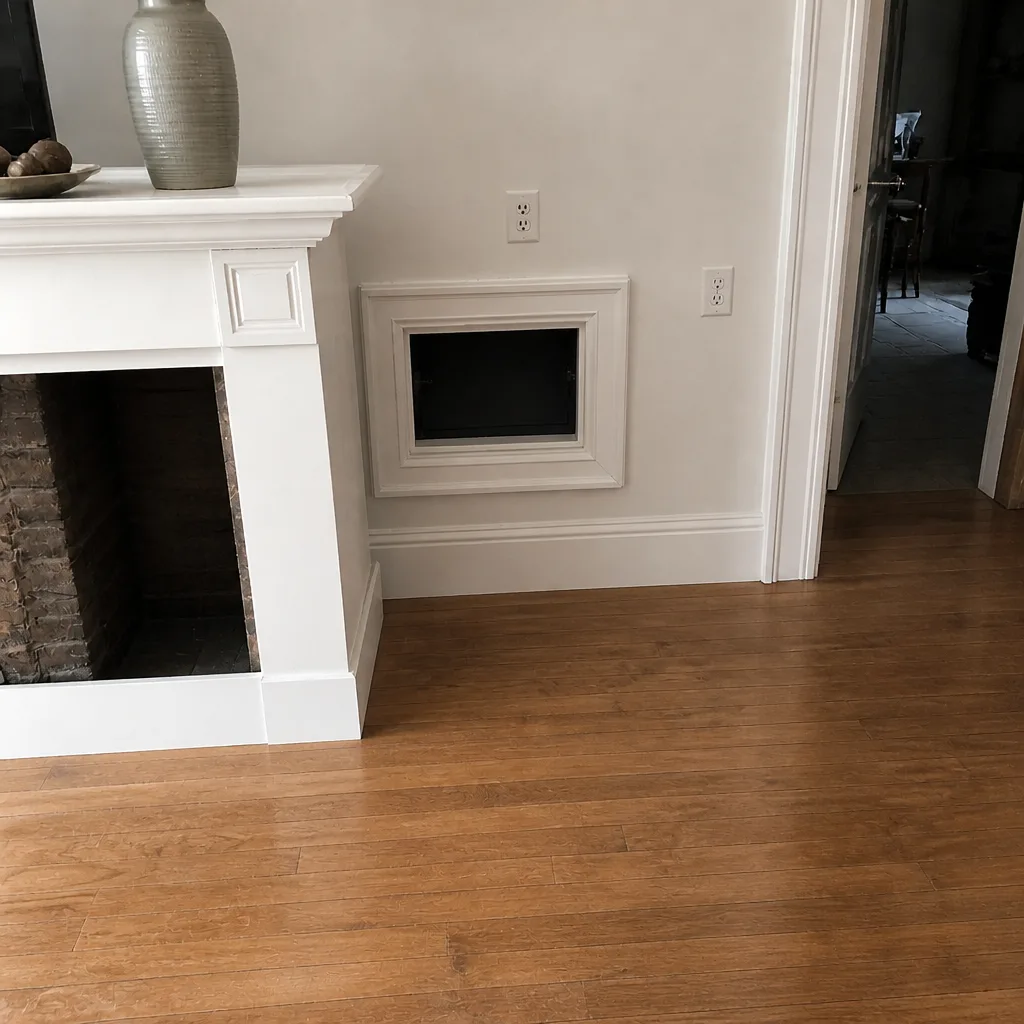 After
When to Call a Professional
Some duct issues are worth watching. Others are active emergencies and need a technician on site before the system runs again. The dividing line is clean: if water, fire, smoke, or pests have gotten into the building, the duct system has almost certainly been affected, and the only safe response is a professional inspection before the air goes back on.
The specific situations that call for a professional:
- Any water intrusion that reached a duct opening, mechanical closet, or ceiling cavity with duct runs
- Any fire or smoke event, even if it looked contained to one room
- Rodent or pest evidence in or near duct registers, returns, or HVAC equipment
- A system that’s been running after an event and now smells musty or chemical
- Visible mold on duct exteriors or at register boots
- A duct system that’s clearly been dropping air pressure or performance since an event
Chelsea Air Duct Cleaning offers free estimates in Chelsea. Call (866) 979-5520. We answer 24/7. Fast dispatch from 7am to 7pm, Sunday through Friday. Our technicians have up to 15 years of experience with full-system duct cleaning, HVAC cleaning, duct repair and sealing, and air quality sanitizing. The local professional who handles the work is licensed and insured as their state requires. The estimate is written, and the price is set per job by that written estimate.
Frequently Asked Questions
Air ducts should be inspected and cleaned as soon as the water has been stopped and the system has been shut off, ideally within the first 24 to 48 hours, because mold can begin colonizing damp duct interiors in that window. Don’t wait to see whether a smell develops – the smell is the late signal, not the early one. Call (866) 979-5520 for an exact quote – estimates are free.
Yes. Turn the thermostat to OFF and switch off the HVAC disconnect if you can do so safely, because a running fan will pull contamination into the duct network and distribute it through every register in the building. Never open electrical panels or pull breakers in a wet environment – have a qualified electrician or the utility handle that. Then call us at (866) 979-5520 to schedule an inspection before the air goes back on.
It still smells because the smoke residue is still physically present in the duct interiors, coils, and plenum surfaces – masking treatments don’t remove surfaces, they cover them. Full remediation involves mechanical cleaning of the whole duct network, HVAC cleaning, and sanitizing treatment on the cleaned surfaces. Call (866) 979-5520 for an exact quote – estimates are free.
Yes, but only if the work follows the right sequence: pest control to close entry points, then mechanical removal of debris under containment, then sanitizing, then sealing of the duct network. Cleaning before the entry points are closed just leaves the access open. Call (866) 979-5520 and we’ll walk you through the scope before any work starts.
Often yes. In Chelsea’s row buildings and prewar apartments, duct systems frequently share chases and returns across units, so an event that looks contained to one floor can affect duct runs serving the whole line. The scope of work needs to reflect the full affected network, not one apartment. Call (866) 979-5520 to schedule an inspection.
Ask for before-and-after photos of your own ducts, not stock images, and a written scope of work detailing what was cleaned, what was sanitized, and what was sealed. A contractor who documents the work with photos of your specific system is the one you can verify. Call (866) 979-5520 for an exact quote – estimates are free.
The Bottom Line
Duct emergencies aren’t really duct problems – they’re airflow problems. When water, fire, or pests get into a building, the duct system becomes the delivery mechanism for whatever comes next, and the first hours determine whether it stays contained or spreads through every room. The response is not complicated: shut the system off, document everything, get a qualified contractor on site before the air goes back on, and expect the work to include cleaning, sanitizing, and sealing rather than just a pass with a vacuum. Chelsea Air Duct Cleaning handles the whole system – ducts, HVAC, dryer vents, and air treatment – with professional-grade Rotobrush and Nikro equipment, Abatement Technologies filtration, and sanitizing products from Honeywell and Aprilaire. If you’re in Chelsea and you’ve got an active emergency, or you’re simply preparing before one, call (866) 979-5520. We answer 24/7. Fast dispatch from 7am to 7pm, Sunday through Friday. Estimates are free, and the price is set per job by the written estimate. Document, don’t guess. Shut down before you start up. And keep this guide somewhere you’ll find it fast.
Written by the team at Chelsea Air Duct Cleaning.