
Last updated November 22, 2026
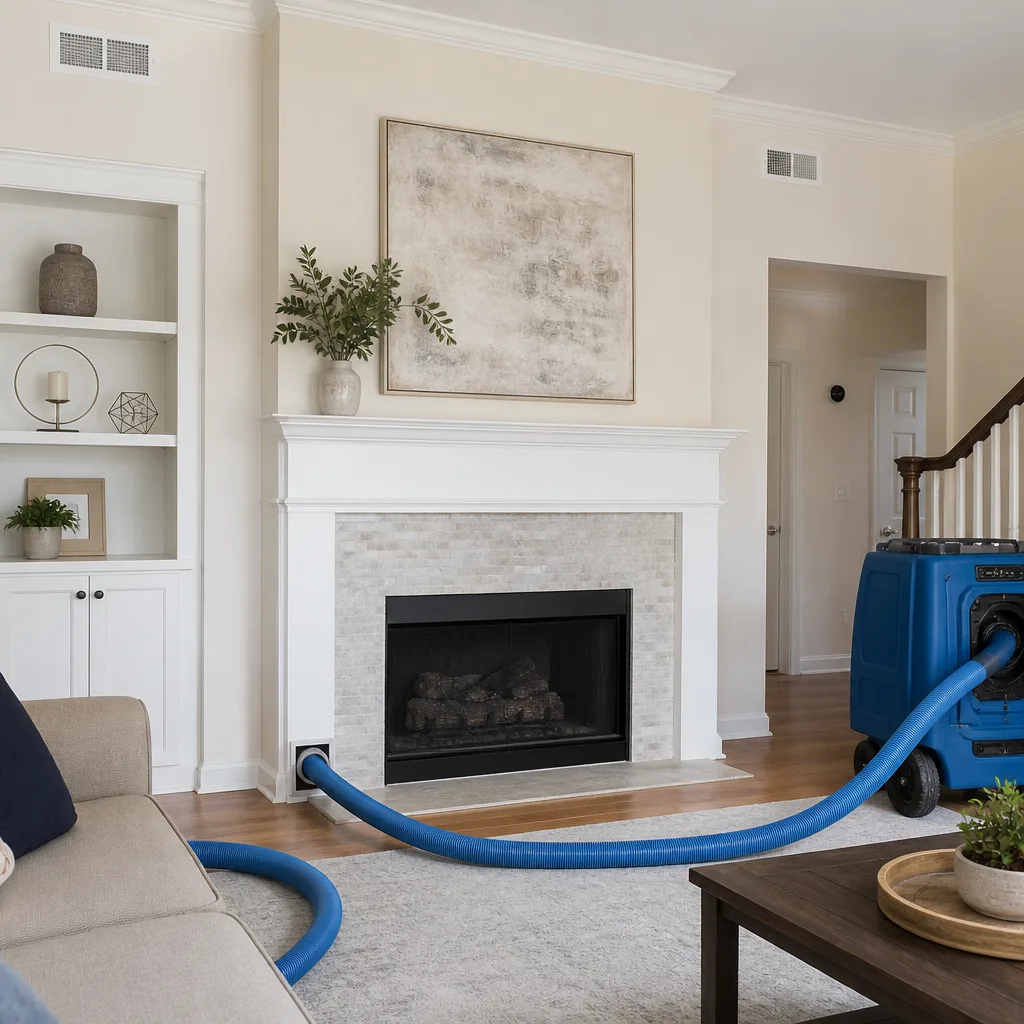 Whole-home duct cleaning
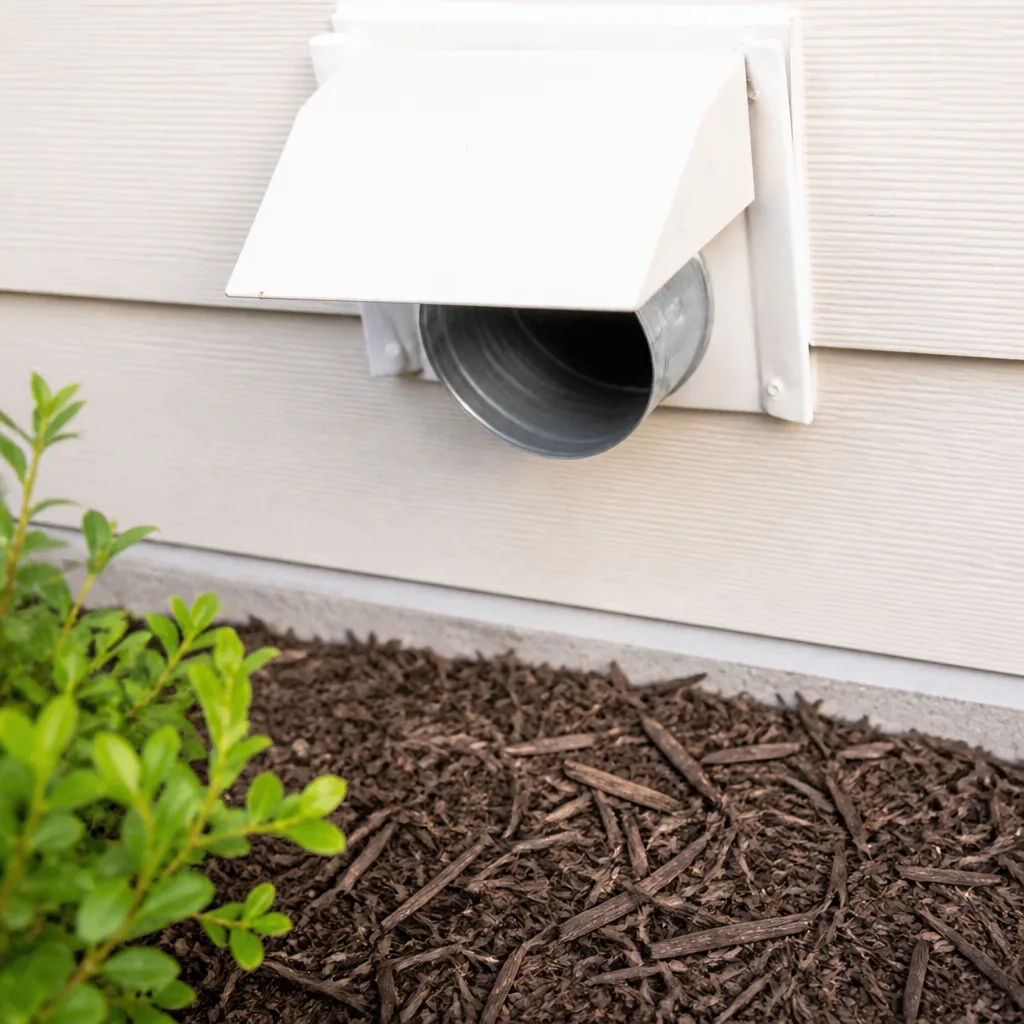 Dryer vent cleaning
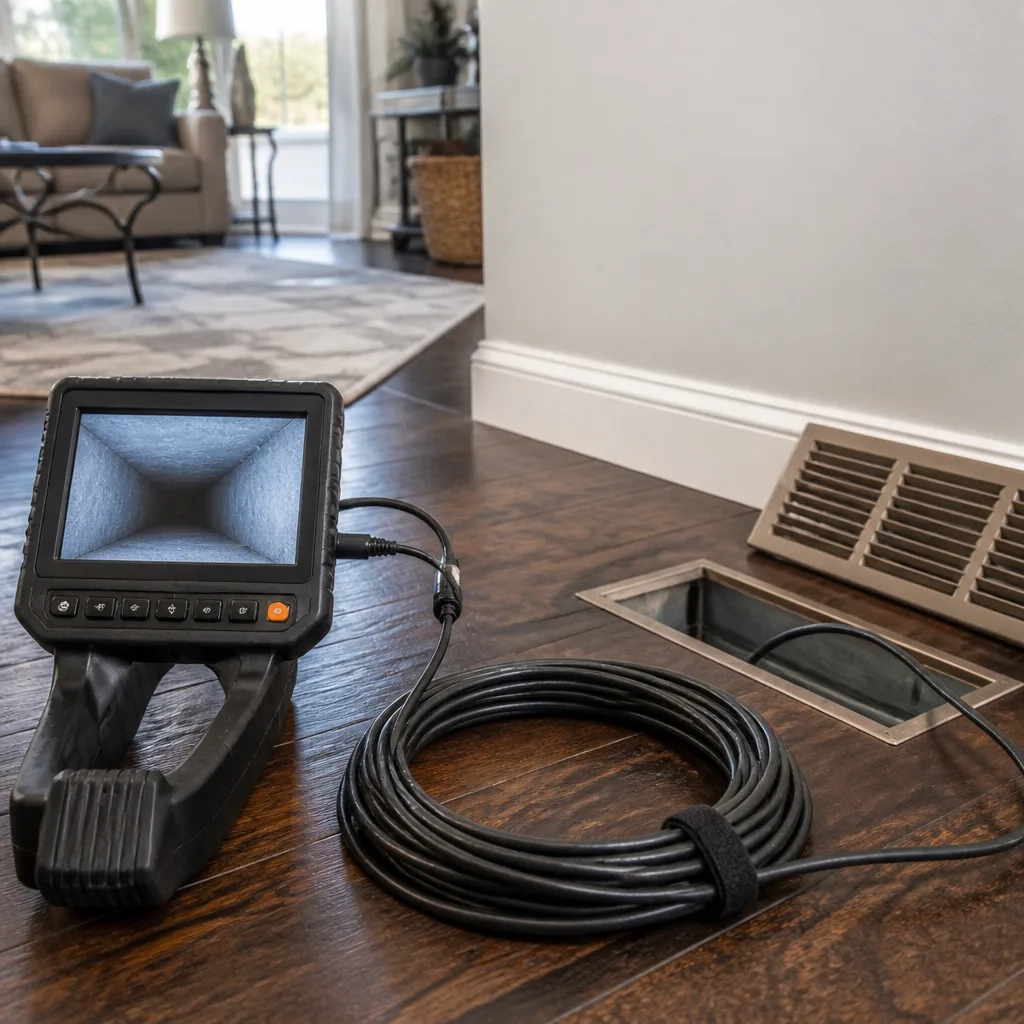 Camera inspection
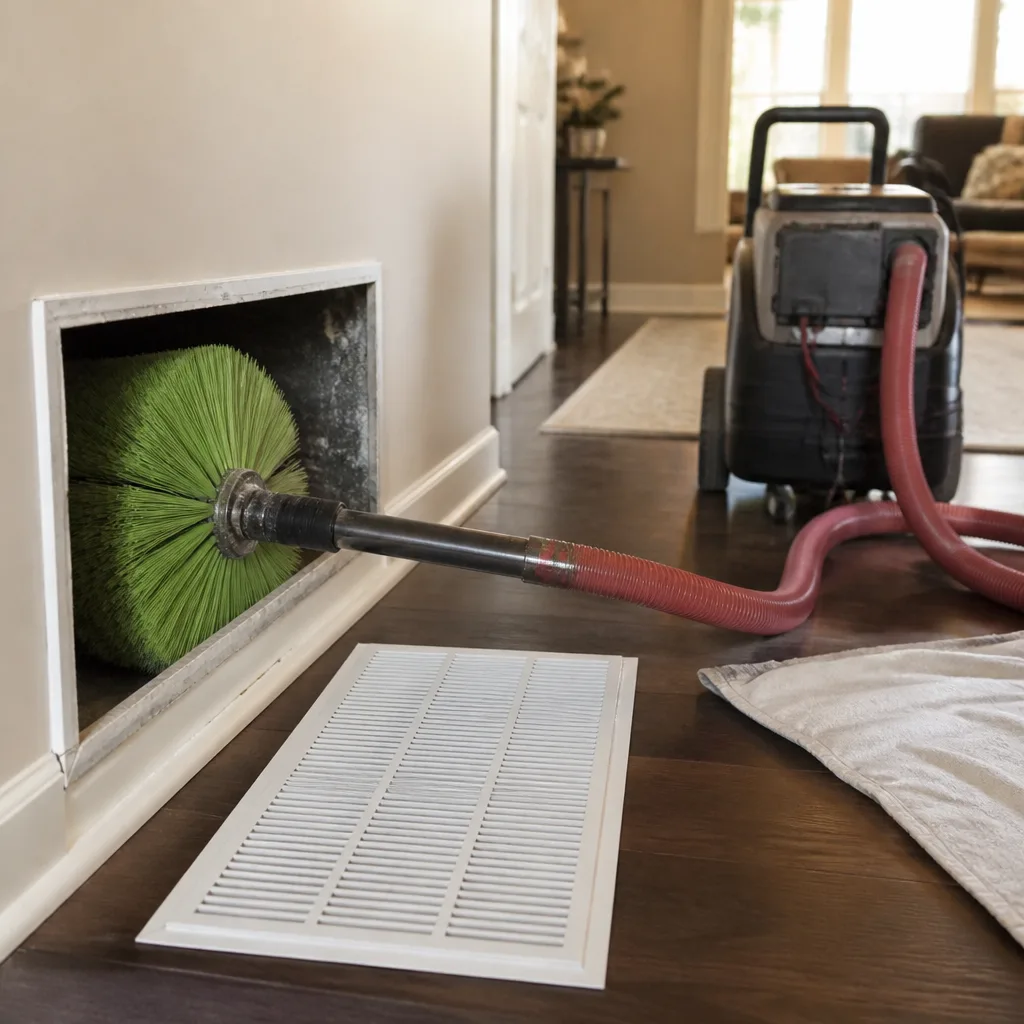 Sanitizing & deodorizing
Whole-system duct and dryer vent check with before-and-after photos - you see exactly what came out of your vents
That "$99 whole-house special" is a bait ad - the real number appears once they are in your hallway, or the "clean" is a shop-vac at the register. We photograph the inside of your ducts before and after instead.
Air Duct Cleaning Permits, Codes & Inspections in Chelsea, NY: What You Need to Know
Here’s the part most Chelsea homeowners get wrong: the cleaning itself almost never triggers a permit, but the repair, sealing, or rerouting that often happens on the same visit can. New York City’s Department of Buildings doesn’t regulate vacuuming dust out of a duct. It does regulate changing the system. Contractors who do both in one afternoon rarely stop to tell you which half of the job needs paperwork, and that’s where violations and headaches start. This guide draws the line clearly: what’s maintenance, what’s an alteration, what the Mechanical Code requires, what your co-op or condo board will ask for, and what documents to keep. You’ll finish knowing exactly what to request before anyone touches your ducts.
Quick Answer
Routine air duct cleaning in Chelsea does not require a permit from NYC’s Department of Buildings. But duct repair, sealing that changes the system’s design, or rerouting ductwork is generally treated as an alteration under the NYC Mechanical Code and may require a filing by a licensed contractor. Co-op and condo boards add their own approval layer on top, and post-renovation cleaning can intersect with Local Law 55 requirements. Always ask your contractor which parts of the job are maintenance and which are alterations.
Styles & brands we work with
- Whole-home duct cleaning
- Dryer vent cleaning
- Camera inspection
- Sanitizing & deodorizing
Table of Contents
- Where Cleaning Ends and Permits Begin
- What the NYC Mechanical Code Says About Duct Integrity
- Co-op and Condo Board Rules That Layer on Top of City Code
- Post-Renovation Cleaning and Local Law 55
- What an Inspection Actually Looks At
- The Paper Trail to Request From Any Contractor
- Step-by-Step: How to Plan Duct Work in a Chelsea Apartment
- Common Mistakes to Avoid
Where Cleaning Ends and Permits Begin
Cleaning is one thing. Changing the system is another. That’s the dividing line, and in our experience it’s the one most Chelsea residents have never had explained to them.
Air duct cleaning removes accumulated dust, debris, and biological growth from inside the duct network. It doesn’t change the size, shape, routing, or capacity of any component. The Department of Buildings treats this as maintenance, similar to changing a filter or vacuuming a register. No filing, no permit, no inspection.
Duct repair and sealing are different. When a technician seals joints to stop air loss, patches a collapsed section, or reroutes a run to serve a new room, the system’s performance characteristics change. Under the NYC Mechanical Code, that kind of work can be classified as an alteration, and alterations typically require a filing by a licensed professional and, in some cases, an inspection before the work is signed off.
The gray zone is where the trouble lives. Consider these common situations we see in Chelsea buildings:
- Sealing a few loose joints as part of a cleaning visit: usually maintenance, no filing.
- Replacing a section of flex duct that has torn: often treated as a minor repair, but worth confirming with your building’s managing agent.
- Adding a new supply run to a room that never had one: almost always an alteration requiring a filing.
- Rerouting ductwork around a new wall or soffit during a renovation: alteration.
- Resizing a trunk line to improve airflow to a specific zone: alteration.
If your contractor is doing cleaning and repair in the same visit, ask them to break the scope into “maintenance” and “alteration” line items in writing. That one question will separate a professional from a crew that’s hoping you won’t ask. Our air duct cleaning work is scoped this way from the start.
What the NYC Mechanical Code Says About Duct Integrity
The NYC Mechanical Code sets the baseline for how duct systems must be built and maintained. It doesn’t mandate cleaning schedules for residential units, but it does establish requirements that building owners and contractors have to respect whenever duct work is performed.
Three areas matter most for Chelsea homeowners:
1. Duct integrity and leakage
The code requires duct systems to be sealed and constructed so they don’t leak air into concealed spaces. That’s why a duct system that has developed gaps at joints or disconnected sections is not just an efficiency problem. It can be a code-compliance problem. When we repair and seal ducts, we’re not only stopping air loss. We’re bringing the system back toward the integrity standard the code expects.
2. Penetrations through fire-rated assemblies
In Chelsea’s multi-family and commercial buildings, ducts often pass through fire-rated walls and floors. The code requires those penetrations to be protected with approved firestop materials. A contractor who cuts into a rated assembly to reroute ductwork without restoring the firestop has created a serious problem. If your building has rated corridors or party walls, ask whether the planned work affects them.
3. Ventilation and exhaust discharge
The code governs where exhaust from kitchens and bathrooms and dryer vents must terminate. Dryer vent runs that are too long, too convoluted, or that discharge into the wrong location are a code issue and a fire risk. We treat dryer vent cleaning as its own dedicated service because a clogged or poorly routed vent is one of the leading causes of residential fires, and it deserves attention beyond a quick vacuum.
None of this means you need to read the code yourself. It means that when someone proposes to “fix that duct while we’re here,” the integrity and firestop questions are the ones worth raising.
Co-op and Condo Board Rules That Layer on Top of City Code
In Chelsea, a contractor can do everything correctly by the Department of Buildings and still run into a problem with the building. Co-op and condo boards set their own rules for any work that touches shared building systems, and duct work almost always does.
Here’s what we’ve seen boards and managing agents ask for before approving duct work:
- Written application describing the exact scope, submitted before scheduling.
- Contractor insurance certificates naming the building and the unit owner, often with specific coverage minimums.
- Proof of licensure for any contractor performing alteration-level work.
- Board approval in writing, which often means waiting for the next board meeting cycle.
- Work-hour restrictions so noise and dust don’t affect neighbors, typically limited to daytime weekdays.
- Post-work documentation, including before-and-after photos and a description of what was done.
The single biggest mistake is skipping board approval because the job “seems small.” Sealing a few joints may not require a DOB filing, but if the work touches a duct that serves another unit or runs through a shared shaft, your board will likely want to weigh in. Getting that approval in writing before the work starts protects you from being ordered to reverse it later.
When you call to schedule, tell us about your building’s requirements upfront. See Chelsea Air Duct Cleaning for how we handle the paperwork side.
Post-Renovation Cleaning and Local Law 55
Local Law 55 is the city’s indoor allergen hazard law, and it’s most commonly associated with rental properties and building owners. But it has real implications for Chelsea homeowners and property managers scheduling duct cleaning after a renovation.
The law focuses on indoor allergen hazards, including mold and pest-related conditions that affect air quality inside a building. When a renovation generates a large amount of drywall dust, insulation fibers, and construction debris, some of that material ends up inside the duct system. If it isn’t properly removed, it can become both an air quality problem and a potential compliance issue for building owners who have obligations under the law.
That’s why we use equipment designed for remediation-level work, including Abatement Technologies air filtration equipment to control airborne particulates during the cleaning process. Cleaning ducts with a shop vac while stirring up construction dust is one of the least useful things a contractor can do. The filtration is what keeps the debris from resettling across the unit.
Here’s the practical point: for anyone renting, managing, or owning property in Chelsea, post-renovation cleaning is not optional upkeep. It’s the step that makes sure a completed renovation doesn’t leave an ongoing air quality problem behind the walls.
After the cleaning, sanitizing with products from brands like Honeywell and Aprilaire helps address any remaining microbial growth or odors. Cleaning removes the material. Sanitizing treats what’s left behind.
What an Inspection Actually Looks At
If your duct work reaches the alteration threshold, a building inspection may follow. Knowing what’s being checked helps you plan, and it also helps you ask better questions of any contractor before work begins.
An inspector is generally looking at four things:
- System integrity. Are the ducts sealed, connected, and constructed so air goes where it’s supposed to go? Disconnected sections, unsealed joints, or improperly supported runs will draw attention.
- Fire protection. Are penetrations through fire-rated assemblies properly firestopped? This is where a hastily cut hole causes problems.
- Exhaust and venting. Do exhaust fans discharge to the correct location, and are dryer vents properly routed?
- Filing accuracy. Does the work match what was described in the filing? Inspectors compare the plan against what’s actually there.
What an inspection typically does not cover is how clean the ducts are. Cleanliness is not the Department of Buildings’ concern. That’s your indoor air quality, your comfort, and your equipment’s efficiency. Cleaning and inspection are separate questions, and a contractor who conflates them is either confused or overselling.
We approach HVAC cleaning as a maintenance service that supports the equipment’s health, not as a compliance item pretending to be a code requirement.
The Paper Trail to Request From Any Contractor
If a DOB question ever arises, the only thing that matters is what’s in writing. Here’s the documentation we recommend every Chelsea homeowner request before duct work begins:
- A written scope of work that clearly separates maintenance (cleaning, sanitizing) from any alteration-level repair or sealing.
- Detailed line-item pricing for each part of the job, so there’s no ambiguity about what was billed and why.
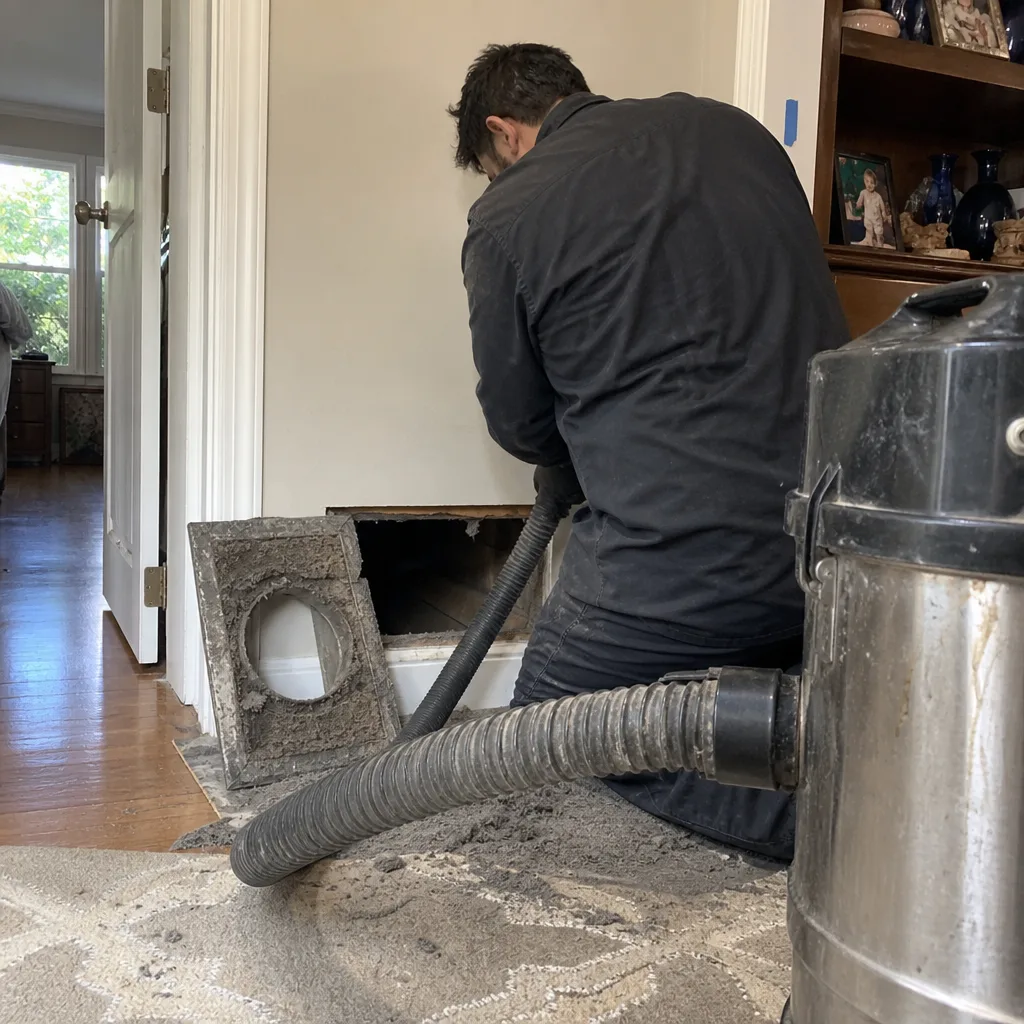
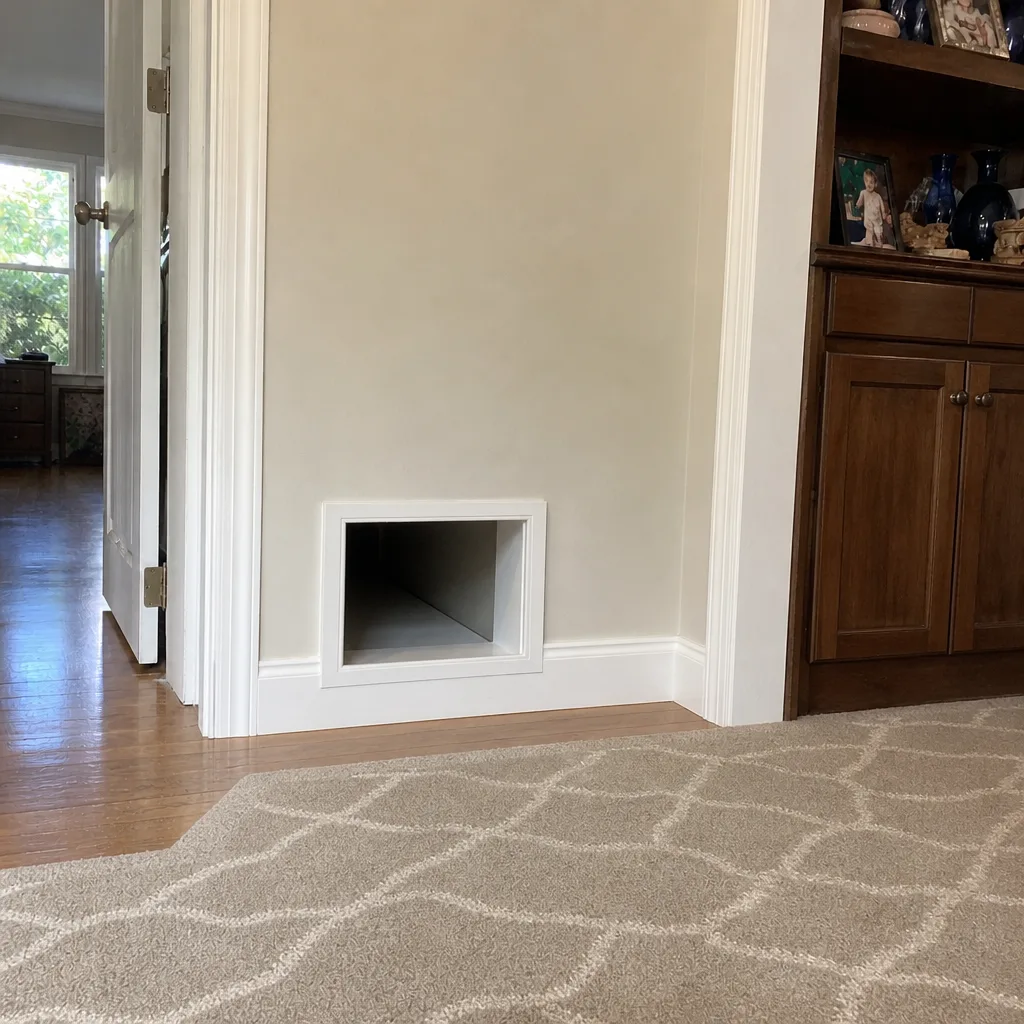
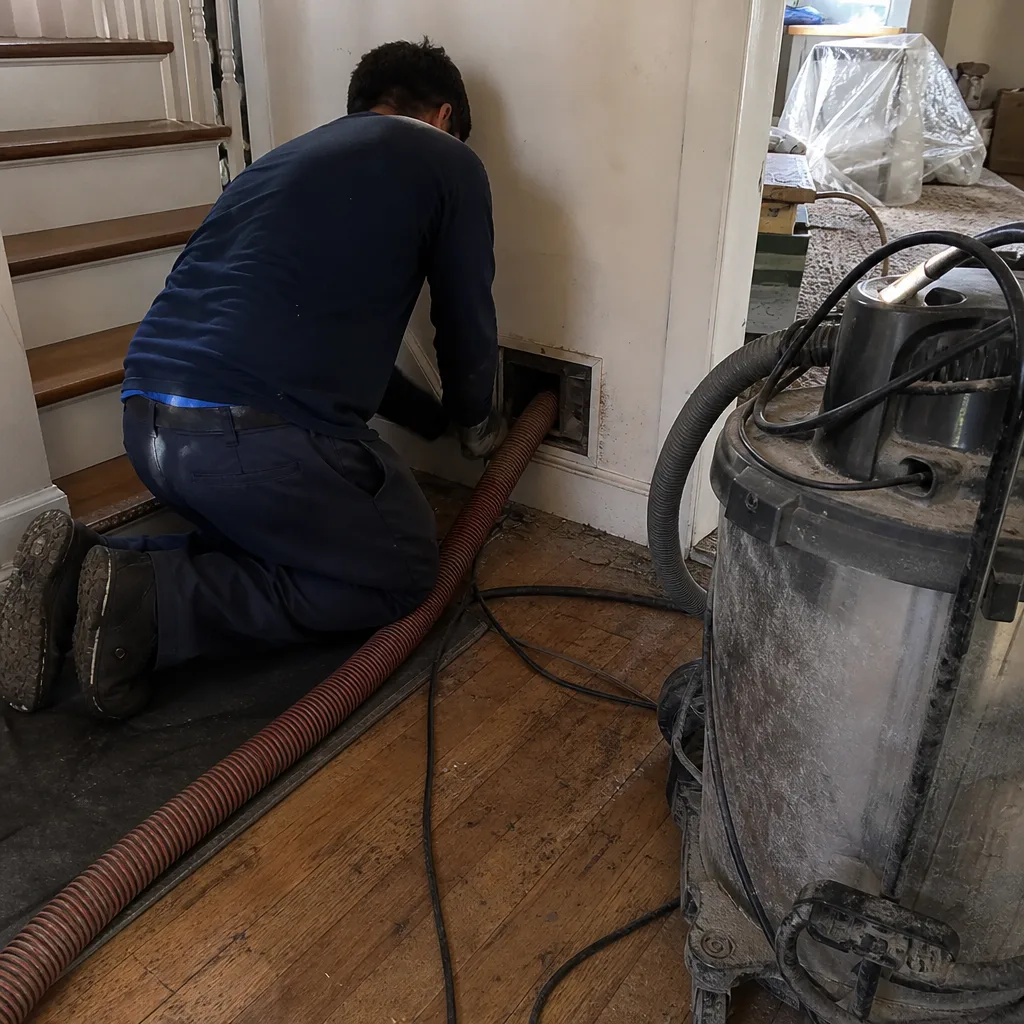
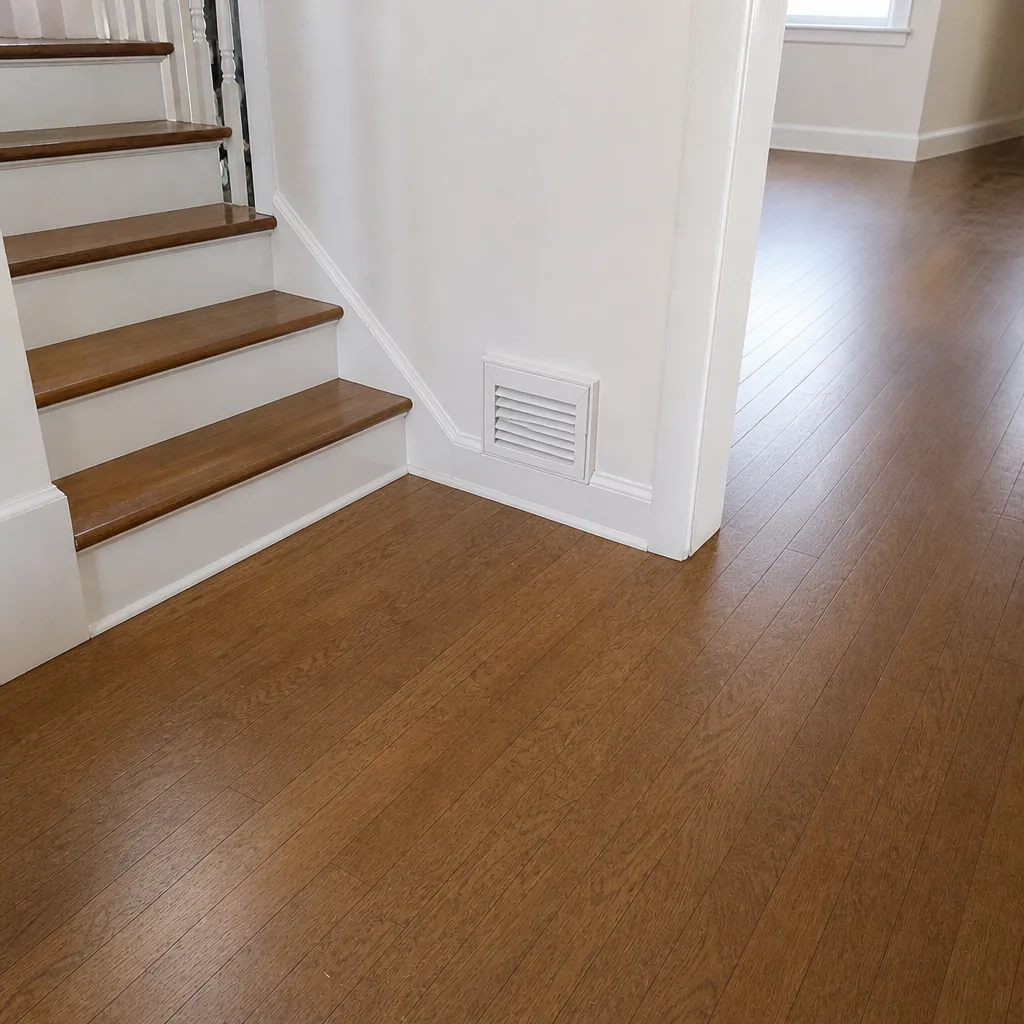
- Photographs of the ducts before and after the work, taken inside the system, not just at the registers.
- A statement of equipment used, especially for any remediation-level filtration, so you can confirm the dust was contained rather than redistributed.
- Proof of licensure for the contractor performing any alteration-level work, plus a copy of any DOB filing or permit number if one applies.
- Confirmation of firestop restoration if the work affected any rated assembly.
We photograph before and after the work on every job, because it’s the only way to know the work was actually done. Photos taken inside your own ducts are the most reliable record you’ll have.
Two more things worth saving: any board approval in writing, and a copy of the contractor’s insurance certificate if the building required it. Between the scope of work, the photos, the filing number if applicable, and the board approval, you have a complete record that answers both a DOB question and a board question years later.
Step-by-Step: How to Plan Duct Work in a Chelsea Apartment
Here’s the sequence we recommend for anyone planning duct work in Chelsea, whether it’s a straight cleaning or something bigger.
- Define what you actually need. Is this routine cleaning, or is there a repair problem? Airflow that’s noticeably uneven, a duct that’s disconnected, or persistent dust in specific rooms usually points to a repair.
- Ask your managing agent what the building requires. Before you schedule anything, find out about approval, insurance, and work-hour rules. In Chelsea co-ops, this is often the longest step.
- Get a written scope of work from the contractor. Make sure it separates cleaning from repair and sealing, and asks directly whether any part of the job is an alteration requiring a DOB filing.
- If alteration-level work is involved, confirm the filing. A licensed contractor should be able to tell you whether a filing is required and be able to provide proof of one if it is.
- Schedule with filtration in mind. Ask what equipment will be used to control airborne debris during the work. In a densely occupied building, this matters.
- Get the work photographed. Before and after, inside the ducts.
- Keep your records. Written scope, photos, filing numbers, board approval: save all of it.
The whole sequence gets easier when the contractor understands that repair and cleaning are separate decisions, which is how we handle the whole system.
Common Mistakes to Avoid
- Assuming all duct work is permit-free. Cleaning usually is. Sealing that changes the system, or rerouting a run, usually is not. Ask which part of the job is which.
- Skipping board approval because the job looks small. If the work touches a shared shaft or a duct serving another unit, your Chelsea co-op may want to weigh in regardless of size.
- Letting a contractor cut first and file later. Alteration-level work that runs ahead of its filing creates a compliance problem that’s expensive to unwind, and it’s often discoverable later.
- Cleaning after a renovation without filtration. Dirt and dust stirred up with a shop vac can end up settling across the apartment instead of being removed.
- Forgetting firestop restoration. When ducts pass through rated assemblies, that fire protection has to be put back. Ask.
- Not getting photos of the work. Without before-and-after photos of your own ducts, you have no way to confirm what was actually done.
- Treating duct repair as a cleaning add-on. Repairing the leak or gap that’s letting debris in matters more than cleaning repeatedly.
See the difference
 Before
 After
 Before
 After
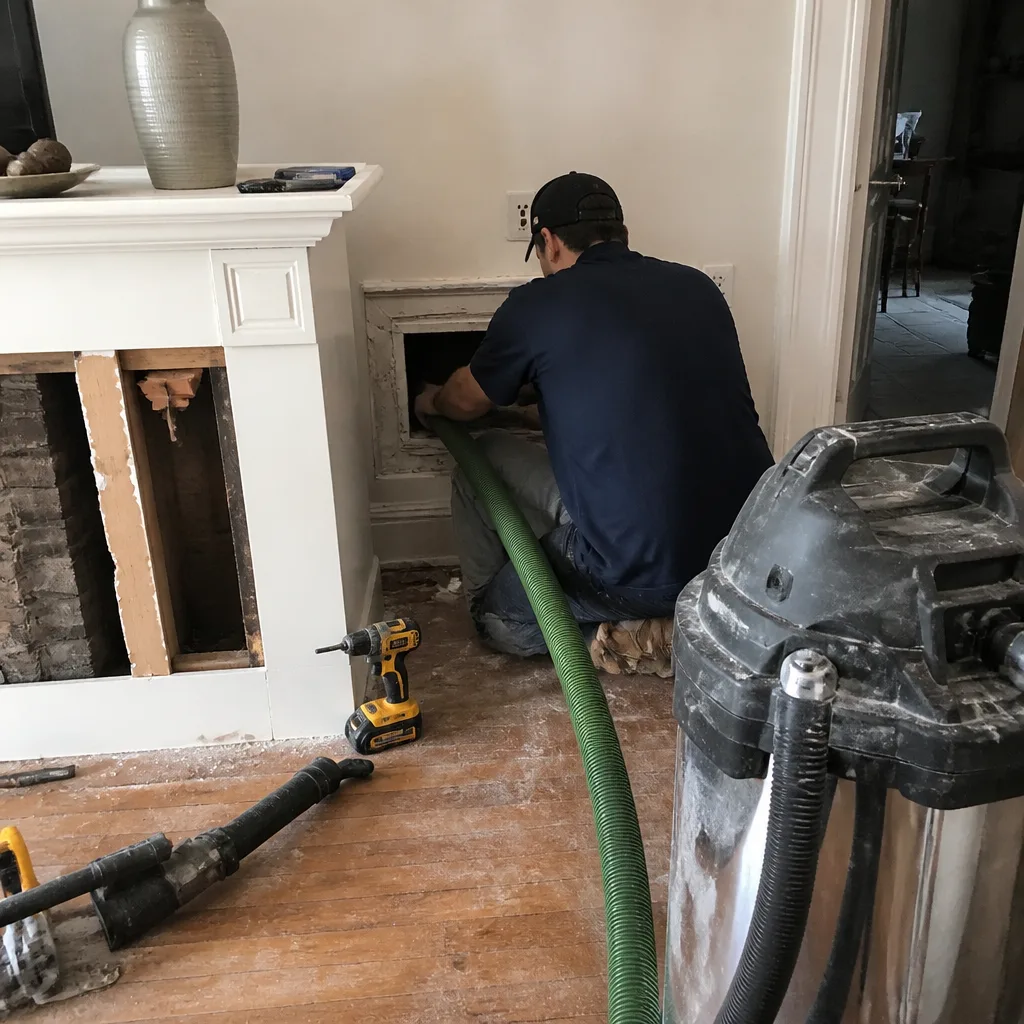 Before
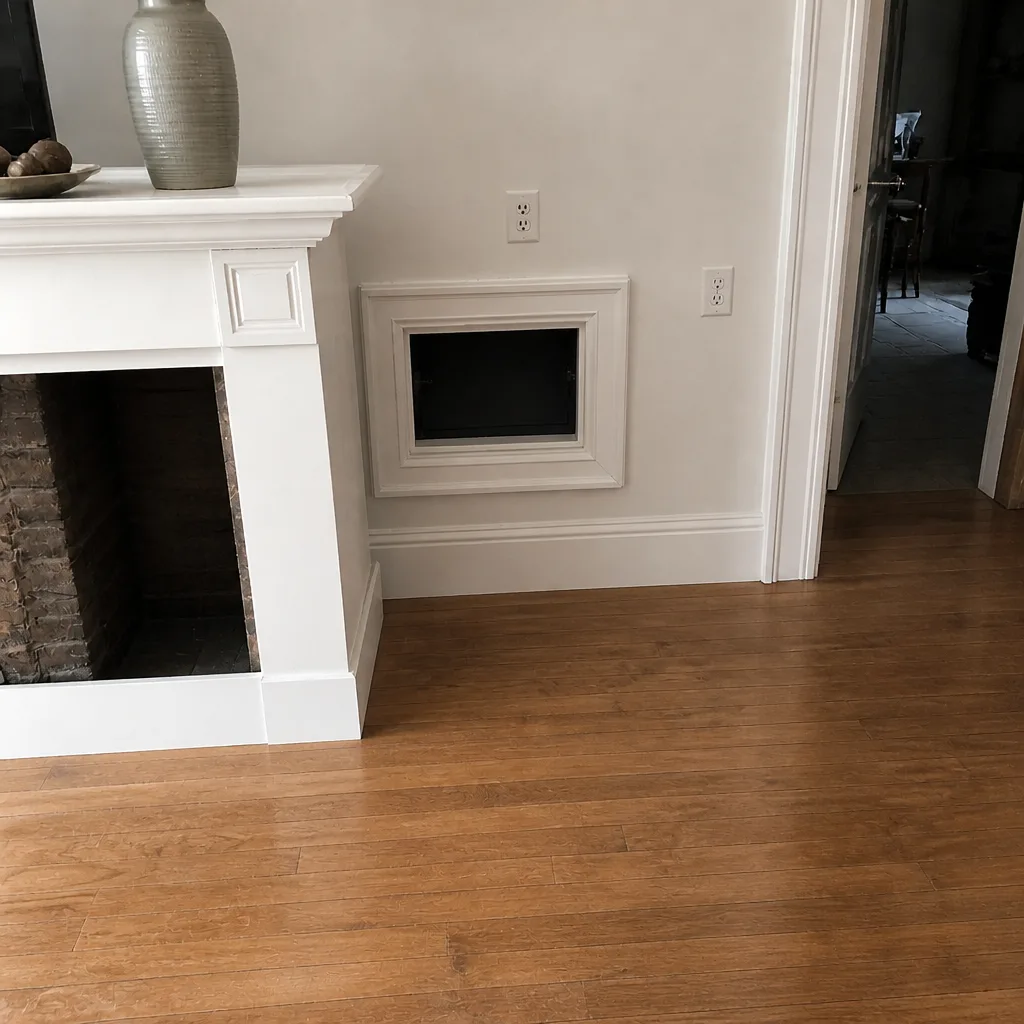 After
When to Call a Professional
Some of this you can figure out yourself. But certain situations are worth a professional eye before anything gets scheduled. If your ducts are visibly disconnected, if you’re getting uneven airflow or persistent dust in certain rooms, or if you’re planning a renovation that will disturb ductwork, get an assessment first. If your building has rated assemblies or firestop details in the duct path, or if you’re uncertain whether the work you’re considering is an alteration, get it answered before you authorize anything. And if it’s been a long time since the system was cleaned and you’ve noticed odors, allergy symptoms indoors, or visible buildup at the registers, that’s a signal worth acting on. Chelsea Air Duct Cleaning offers free estimates in Chelsea. Call (866) 979-5520. We answer 24/7. Fast dispatch from 7am to 7pm, Sunday through Friday.
Frequently Asked Questions
Routine air duct cleaning in Chelsea does not require a permit from the NYC Department of Buildings. Cleaning that removes debris without changing the system is considered maintenance. However, duct repair, sealing that changes the system’s design, or rerouting that adds or removes runs may be treated as an alteration requiring a filing by a licensed contractor. Call (866) 979-5520 for an exact quote on your job – estimates are free.
Cleaning removes accumulated material without changing the system. Alteration changes the system in a way that affects its design, capacity, or safety characteristics, including rerouting a run, adding a new supply, or resizing a trunk line. Alterations typically require a filing under the NYC Mechanical Code. The distinction matters because a single visit can involve both.
In most Chelsea co-ops and condos, yes, if the work touches shared building systems or runs through shared shafts. Boards typically ask for a written scope of work, insurance certificates naming the building, and written approval before you schedule. Get it in writing even when the work seems minor. Call (866) 979-5520 for an exact quote on your job – estimates are free.
Local Law 55 is NYC’s indoor allergen hazard law, and it applies to property owners and managers working to control indoor air quality problems. Post-renovation duct cleaning is where it most often intersects with duct work: leftover construction dust inside the ducts becomes an air quality problem, and proper removal with filtration protects residents and helps property owners stay within their obligations.
Ask for before-and-after photographs taken inside your ducts, not just at the registers. A written scope of work that describes exactly what was cleaned, sealed, and sanitized, plus photos of the interior before and after, gives you the record you need. Call (866) 979-5520 for an exact quote on your job – estimates are free.
There’s no fixed schedule that applies to every home. Homes with pets, recent renovation, or a long interval since the last cleaning usually benefit from more frequent attention than a lightly occupied unit. What matters most is a proper inspection of the system and a look for repairs: gaps, disconnected sections, or dust sources that drive repeated buildup. Call (866) 979-5520 for an exact quote on your job – estimates are free.
The Bottom Line
Permits and duct cleaning are two separate questions, and in Chelsea the confusion between them causes most of the problems. Cleaning is maintenance. Sealing, repairing, and rerouting can cross into alteration, which is where the NYC Mechanical Code and the Department of Buildings come in. Layer on your co-op or condo board’s rules, and you need written approval for far more work than you’d expect. Post-renovation cleaning under Local Law 55 is a different compliance consideration again. The practical rule: break every scope into maintenance and alteration, get it in writing, get photos from inside the ducts, and keep the paper trail. Our technicians have up to 15 years of experience with professional-grade equipment from Rotobrush, Nikro, and Abatement Technologies, and we offer free estimates across Chelsea.
Ready to schedule duct cleaning or talk through repair and sealing in Chelsea? Call (866) 979-5520. We answer 24/7. Fast dispatch from 7am to 7pm, Sunday through Friday. We’ll walk through the scope, separate maintenance from any alteration-level work, and give you a written estimate before anything begins.
Written by the team at Chelsea Air Duct Cleaning.