
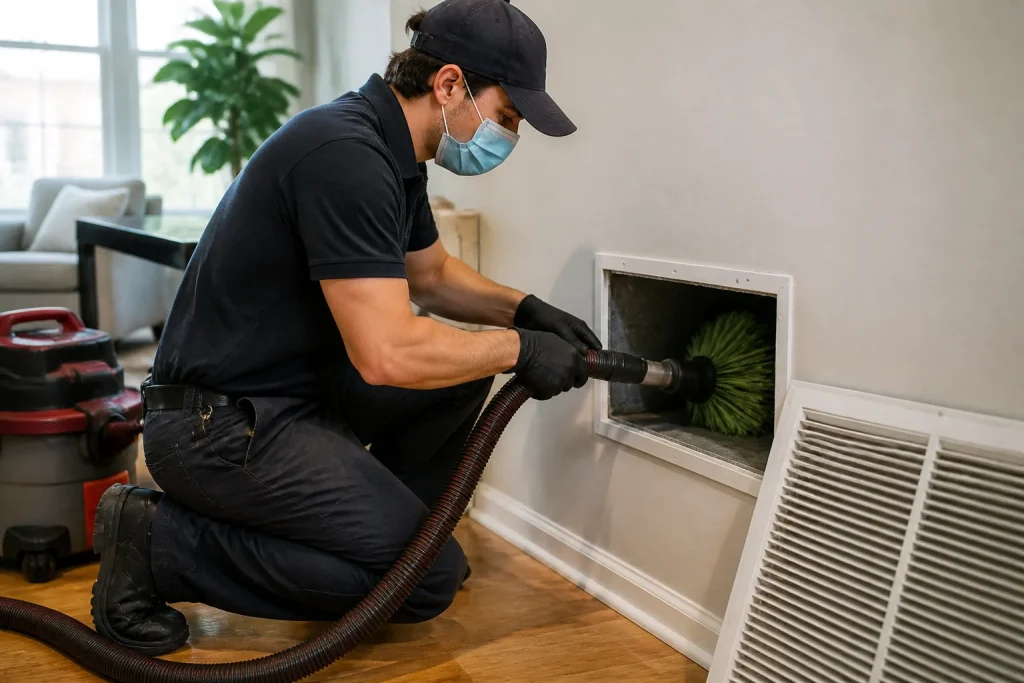
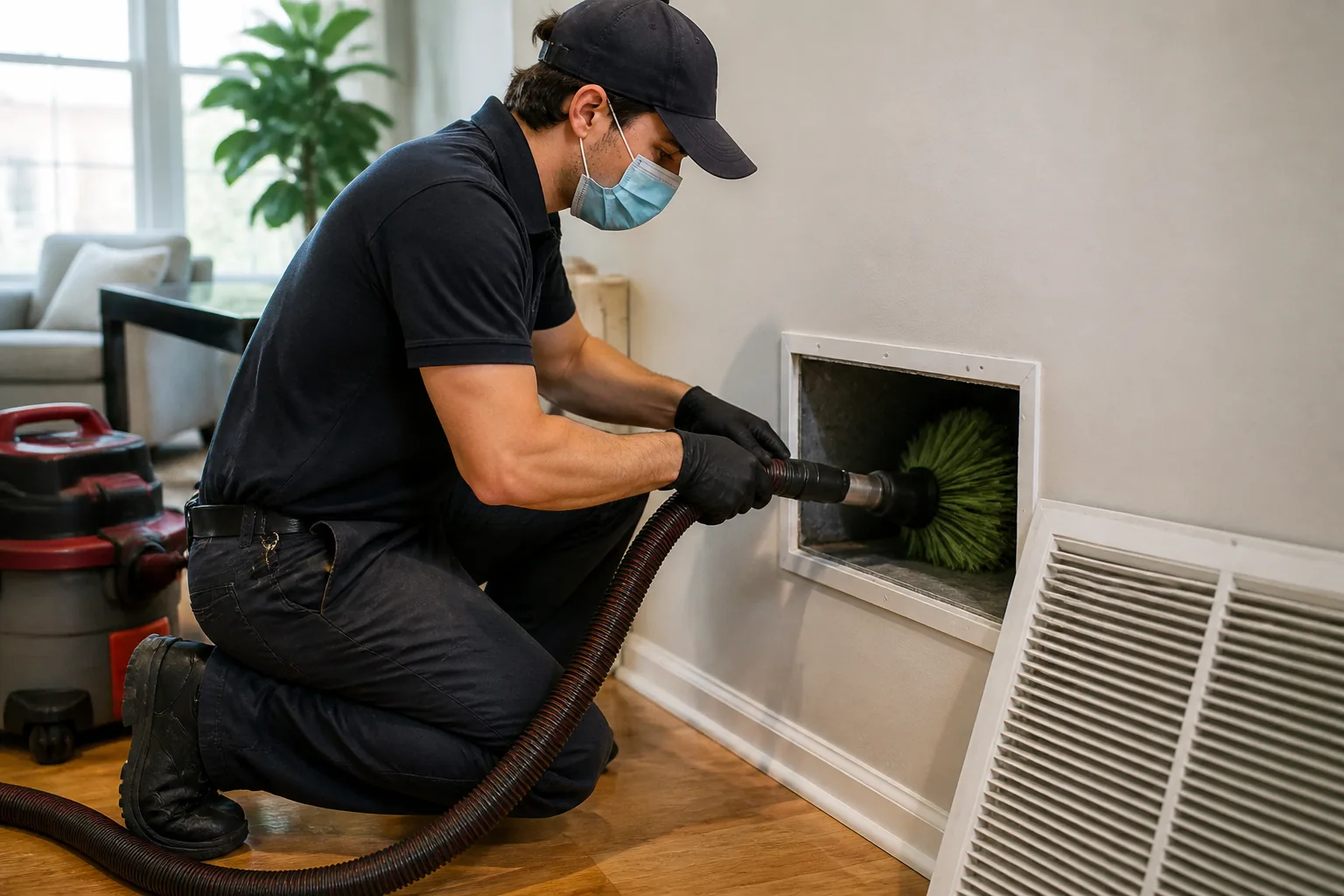
Air Duct Cleaning: Repair or Replace? How Chelsea Homeowners Decide
Here’s the uncomfortable truth about duct cleaning: sometimes cleaning is the worst thing you can do for a system. A heavily corrugated flex duct with collapsed sections and unsealed joints will recirculate debris faster after cleaning than before, because agitation dislodges debris that was previously stuck to failing liner material. So before anyone books a cleaning in Chelsea, the real decision is repair, seal, or replace. The answer comes from inspecting the system, not from a price list.
What Are the Three Real Decision Categories?
Chelsea homeowners tend to think in two options: clean it or rip it out. In practice there are three outcomes, and the physical condition of your ducts decides which one applies.
- Clean only. The right call when the duct material is sound, joints are mostly tight, and the contamination is surface-level: dust, pet hair, construction debris, or years of ordinary buildup. The system is worth cleaning because it will stay clean.
- Clean and seal. The right call when the ducts are structurally intact but leaking at joints, seams, and connections. Sheet metal with separated seams and flex duct with loose collars both land here. Sealing keeps conditioned air where it belongs and stops contaminated air from being pulled in through gaps.
- Clean and replace. The right call when duct material has failed. Collapsed flex, torn or delaminating internal liner, water-damaged fiberboard, and crushed runs buried behind finished walls all qualify. Cleaning a failing system just loosens what’s already breaking down.
The inspection has to answer one question honestly: is this duct network still doing its job as a duct? If yes, cleaning and sealing make sense. If not, replacement or partial replacement is the only outcome that holds. In our experience around Chelsea, the answer is usually clear once someone actually looks inside the system instead of quoting over the phone.
Why Is Duct Leakage the Most Important Number?
Duct leakage rate, measured as a percentage of total system airflow, is the single most useful metric in the repair-versus-replace decision. A duct system leaking a large share of its airflow is wasting energy and pulling unfiltered air from basements, crawlspaces, and wall cavities into your living space. The leakage number tells you whether sealing is worthwhile or whether the network is too far gone.
Two systems can look equally dusty at the registers and be in completely different condition:
- A system with moderate leakage and sound material: sealing recovers most of that lost air, and the energy savings pay back the work.
- A system with heavy leakage and failing material: sealing a collapsing duct is like patching a tire with a torn sidewall. The money is better spent replacing the failed runs.
A proper assessment means a technician maps the leakage points and checks material condition at the same time. Leakage alone doesn’t tell you to replace; material condition alone doesn’t tell you to seal. Together they point to one answer. If you’d rather have a trained eye make that call than guess from a register, call (866) 979-5520 and we’ll take a look.
What Duct Materials Will You Find in Chelsea Buildings?
Chelsea’s building stock is a mix of pre-war walk-ups and mid-century conversions, and each era of construction brought its own duct material with its own lifespan and failure mode. Knowing what’s behind your walls helps you anticipate what an inspection will find.
- Flexible duct (flex). Common in retrofits and branch runs. Corrugated interior, and the ridges trap debris. Lifespan is shorter than rigid metal, and failure shows up as sagging, crushed sections, torn outer jacket, and collapsed liner. Flex is the material most likely to fall into the replace category once it deteriorates.
- Galvanized sheet metal. The workhorse of older buildings. Durable and cleanable, but joints and seams loosen over time, which is where leakage starts. Usually a strong candidate for cleaning and sealing rather than replacement.
- Fiberboard duct. Common in some mid-century work. The interior can erode and shed fibers, and moisture damages it permanently. Once the surface breaks down, cleaning makes it worse.
- Cast iron. Found in some pre-war buildings, typically as part of legacy chases. It’s rigid and long-lived, but interior surfaces can corrode and pit, trapping debris in ways that are hard to fully clean.
Material type alone doesn’t decide anything. A galvanized system with torn seams may still be worth sealing, and a flex run with a collapsed section may only need that branch replaced. The point is to know what you’re dealing with. Chelsea buildings vary street to street, which is why we inspect before recommending.
How Do You Weigh Repair Costs Against Replacement Savings?
The cost-benefit calculation comes down to one question: does sealing extend the useful life of your ducts long enough to justify the expense, or does replacement deliver faster savings through energy efficiency? Here’s how to think it through.
- Estimate the leak. A high leakage rate means a meaningful share of your heating and cooling never reaches the rooms you’re paying to condition.
- Check remaining duct life. If the material is sound and likely to last many more years, sealing is money well spent. If the material is already failing, sealing buys you a short runway.
- Compare the timelines. When sealing costs less than replacement and the ducts have plenty of life left, sealing wins. When the ducts are near the end of their usable life, replacement pays back faster because you stop paying twice: once for the patch, once for the eventual replacement.
- Account for the whole system. Duct repair and sealing is only one piece. Coils, blower, and registers all affect efficiency, and a full HVAC cleaning alongside duct work keeps the whole system moving air the way it should.
Those numbers are estimates, and the written estimate is what sets the final price. What we won’t do is quote a cleaning before we know whether cleaning is even the right move.
Is Partial Replacement Worth It in Chelsea Apartments?
Partial replacement is the underused middle path, and it fits Chelsea’s constrained building interiors especially well. The idea is simple: replace the deteriorated branch runs and keep the serviceable trunk lines. You get the benefit of new duct where it matters without tearing into finished walls and ceilings to replace a trunk that’s still doing its job.
This approach makes sense when:
- The main trunk is rigid metal in decent condition, but several branch runs are crushed flex or failing liner.
- Access to the trunk is difficult but the branches are reachable through closets, soffits, or short wall openings.
- Only part of the system was installed or modified poorly, leaving the rest intact.
It doesn’t make sense when the trunk itself is failing, or when access is so limited that opening the walls for a partial job costs nearly as much as doing the whole system. That’s a judgment call, and it’s why we inspect the full run before recommending anything. A partial job done well beats a full replacement done for no reason, and it beats a cleaning that leaves failing ducts in place.
When Should You Call a Professional?
Some jobs are worth a look from a pro even if you’re handy. If you notice uneven airflow room to room, visible dust streaming from a register, musty odors when the system runs, or a heating and cooling bill that’s climbing without explanation, those are signs the duct network itself is the problem. The same goes for any system with visible damage at a register: crushed flex, torn liner, or separated seams.
We approach the whole system, not just the dust. That means professional-grade equipment from Rotobrush and Nikro, Abatement Technologies air filtration to control airborne debris while we work, and air duct cleaning paired with repair and sealing where the ducts need it. If your system needs sanitizing afterward, we use Honeywell and Aprilaire products to treat microbial growth and odors. And because dryer vent cleaning belongs in the same visit for most homes, we handle that too. You can read more about who we are at Chelsea Air Duct Cleaning, or jump straight to booking with a call.
Related services in Chelsea: air duct cleaning, HVAC cleaning, dryer vent cleaning, duct repair and sealing, and air quality sanitizing.
The Bottom Line
The repair-or-replace decision isn’t made at the register. It’s made after a technician maps the leakage points, assesses duct material condition, and compares the long-term air quality and energy picture for that specific system. Clean only when the ducts are sound. Clean and seal when they’re tight but leaky. Partial or full replacement when the material has failed. Cleaning a failing system just moves debris around faster.
Our technicians have up to 15 years of experience across ducts, vents, and air quality work, and we inspect before we recommend. If you’re in Chelsea and need help deciding, Chelsea Air Duct Cleaning offers free estimates. Call (866) 979-5520. We answer 24/7. Fast dispatch from 7am to 7pm, Sunday through Friday.
Frequently Asked Questions
You can, but it often makes things worse. Cleaning a system with collapsed flex, torn liner, or water-damaged fiberboard loosens debris that was previously stuck to the failing material and sends it through the air. In most Chelsea apartments with damaged ducts, repair or partial replacement is the better first step.
An inspection that measures leakage and checks material condition tells you. Sound material with leaky joints points to sealing. Failing material with high leakage points to replacement or partial replacement. Register dust and uneven airflow are signs worth investigating, but the answer comes from inside the system.
Usually, and it often fits Chelsea’s tight interiors better. Replacing deteriorated branch runs while keeping sound trunk lines avoids tearing into finished walls. Whether it’s cheaper in your case depends on trunk condition and access, and the written estimate sets the final price. Call (866) 979-5520 for a free estimate.
It depends on the system and the home, not a fixed calendar. Homes with pets, recent renovations, or visible buildup need attention sooner; clean, well-sealed systems hold their condition longer. Sealing leaks is what keeps cleaning from becoming an annual habit, which is why we look at the whole system first. A free estimate is the honest starting point. Call (866) 979-5520.
Written by the team at Chelsea Air Duct Cleaning.
Need Air Duct Cleaning Help?
Call Chelsea Air Duct Cleaning - the local pro we connect you with is licensed and insured, here with fast help in Chelsea.
(866) 979-5520